

Koshu Dream House: Chapter 4
Everyday was full of creative practise and cultural experiences, but our time with Akemi was sadly coming to an end…
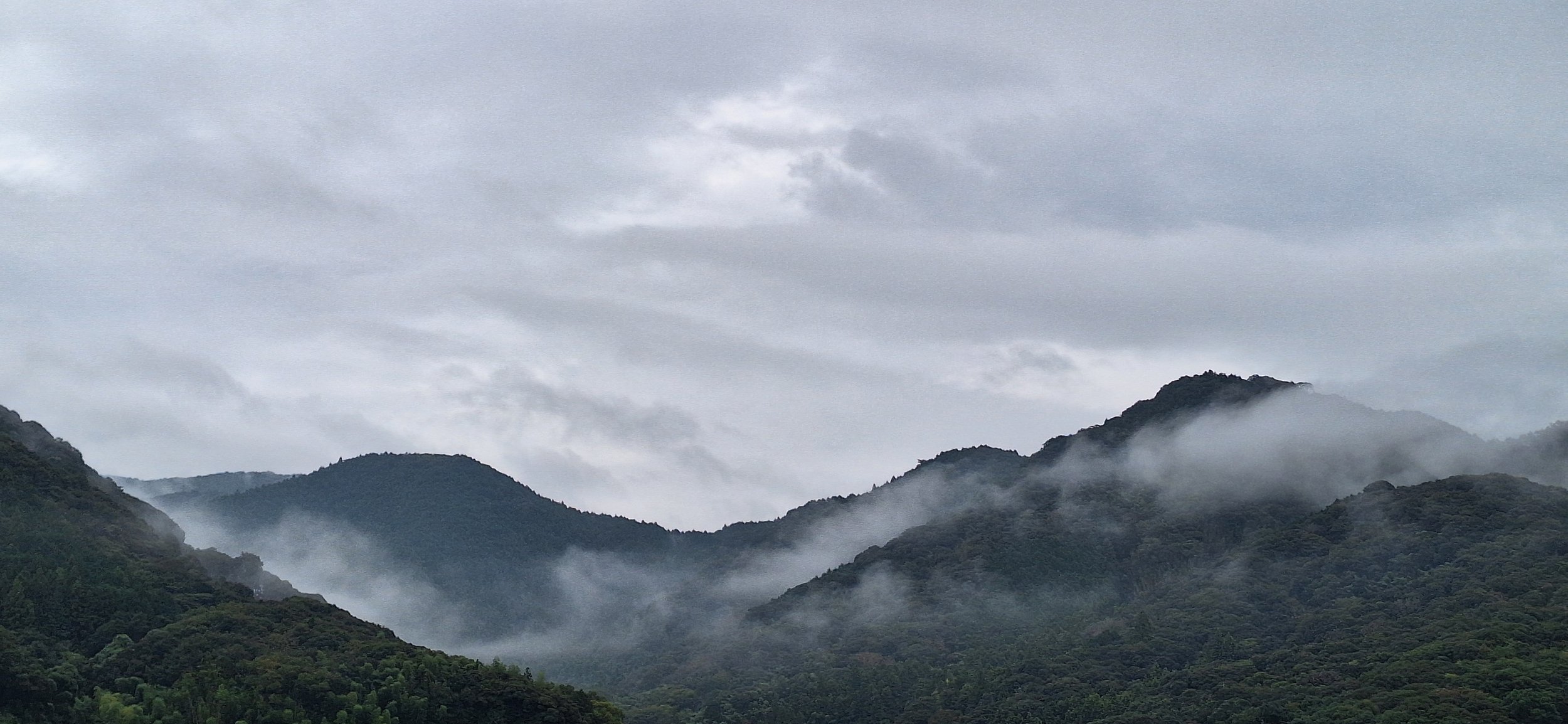
Misty Akiyoshidai. A captivating landscape seen from Koshu Dream House.
Our last few lessons with Akemi were dedicated to preparing our final artwork. I agonised a bit too much as to what to do for my final piece. We had practised painting bamboo, orchids, magnolia and iris, and I could have revisited one of these subjects, but I kept thinking about making the artwork a bit more personal, and what travelling to Japan meant to me. I looked to my little polka dotted daruma for inspiration…
A daruma, or dharma doll, is a hollow, round Japanese doll made of papier-mâché and modelled after Bodhidharma, the founder of the Zen sect of Buddhism. These dolls come in varying sizes, colours and designs, but they are seen as a symbol of perseverance, making them a popular gift of encouragement, commonly used alongside goal setting. Daruma are associated with a beloved Japanese proverb, “nana korobi yaoki”, which means, “fall down seven times, get up eight” because the daruma doll's rounded shape allows it to return to its original position even if knocked over, representing such persistence. Daruma reminds us all to keep focused on achieving our goals.
For me, my goal of wanting to go to Japan all these years had finally been achieved. Even though this trip was all of my own doing, I have friends and family that offered travel tips, advice and encouragement. Goals are rarely achieved in isolation, and other people help us to keep motivated and on the right track.
I felt my little daruma from Kenji-San perfectly encapsulated the achievement of finally making it to Japan and experiencing many aspects of Japanese culture. It also represented the care and support I received on my journey.
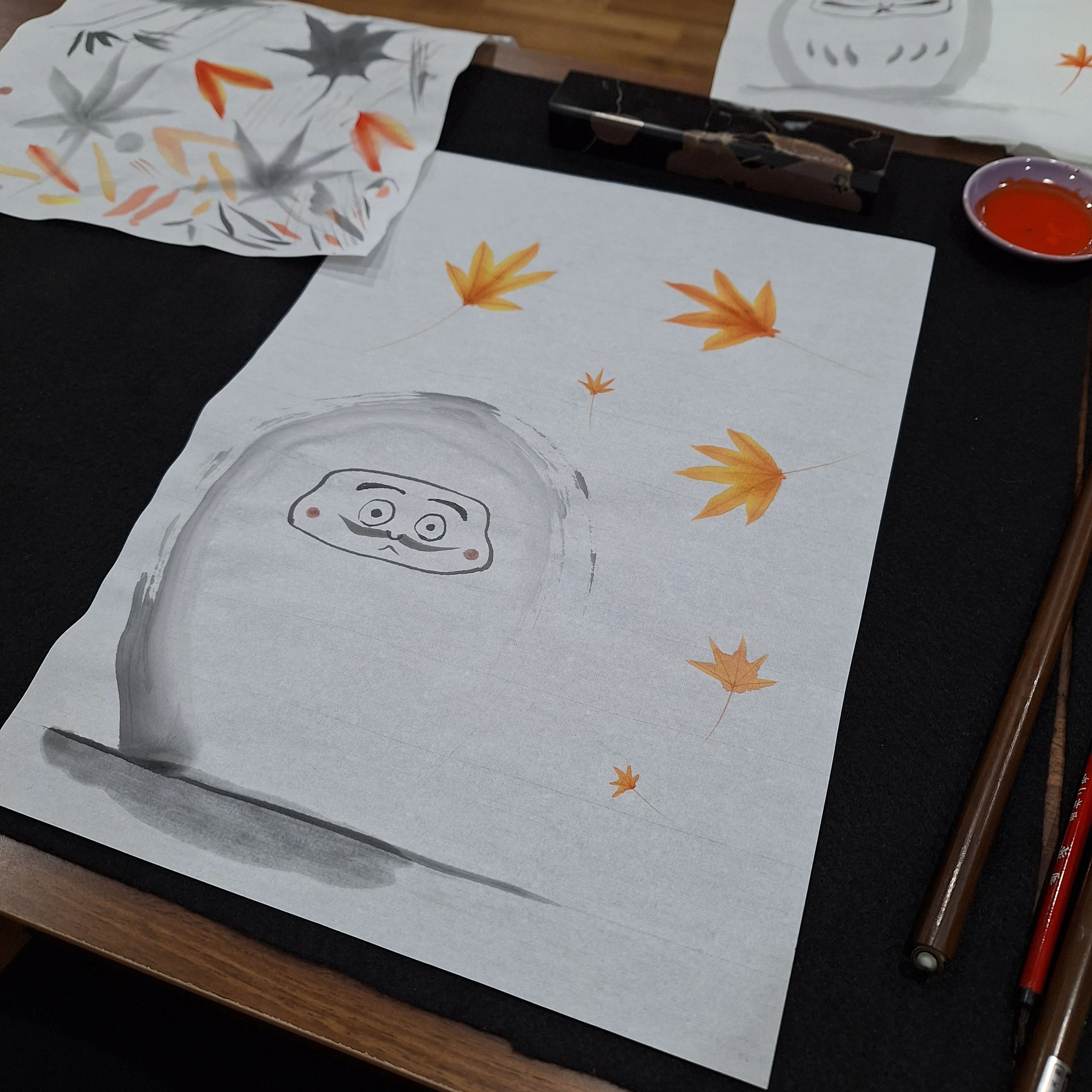
One of my many practise attempts. I love how the maple leaves turned out colour-wise. The group thought my daruma was very cute and funny. He looks a little surprised!
I was also inspired by the slight changes in the season. During my trip, the weather seemed very unseasonal, with temperatures hitting 30°C on some days! I saw cherry blossoms in bloom, and we even experienced the tail end of a typhoon! Just in the last few days of the residential course, we were lucky enough to see the Autumnal colours on the trees come through, and the maple trees turning red!
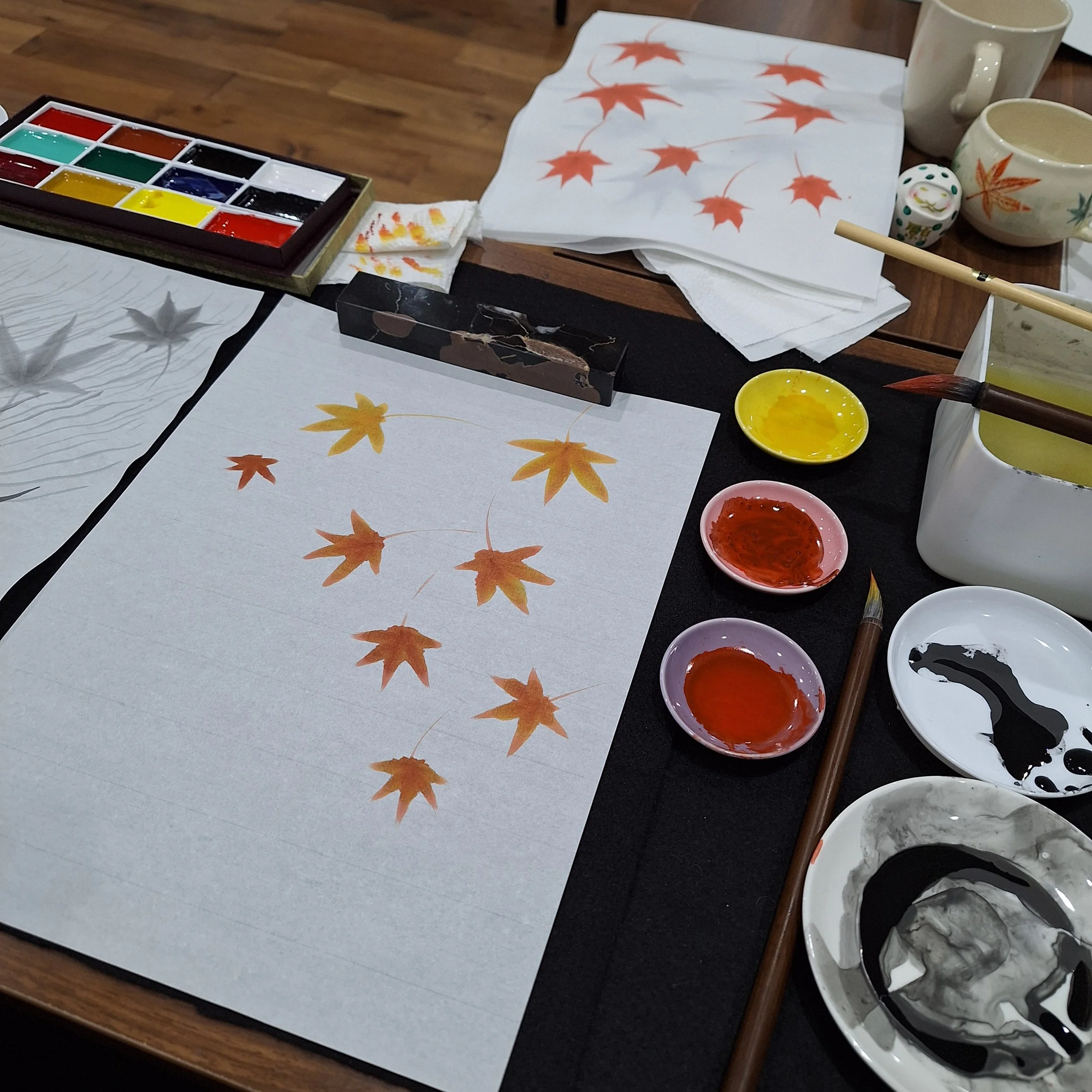
Maple leaf practise. Transitioning from black ink to colour took a little while to get used to, but taking the time to prepare the colours and load the brush correctly resulted in these gorgeous Autumnal colours!
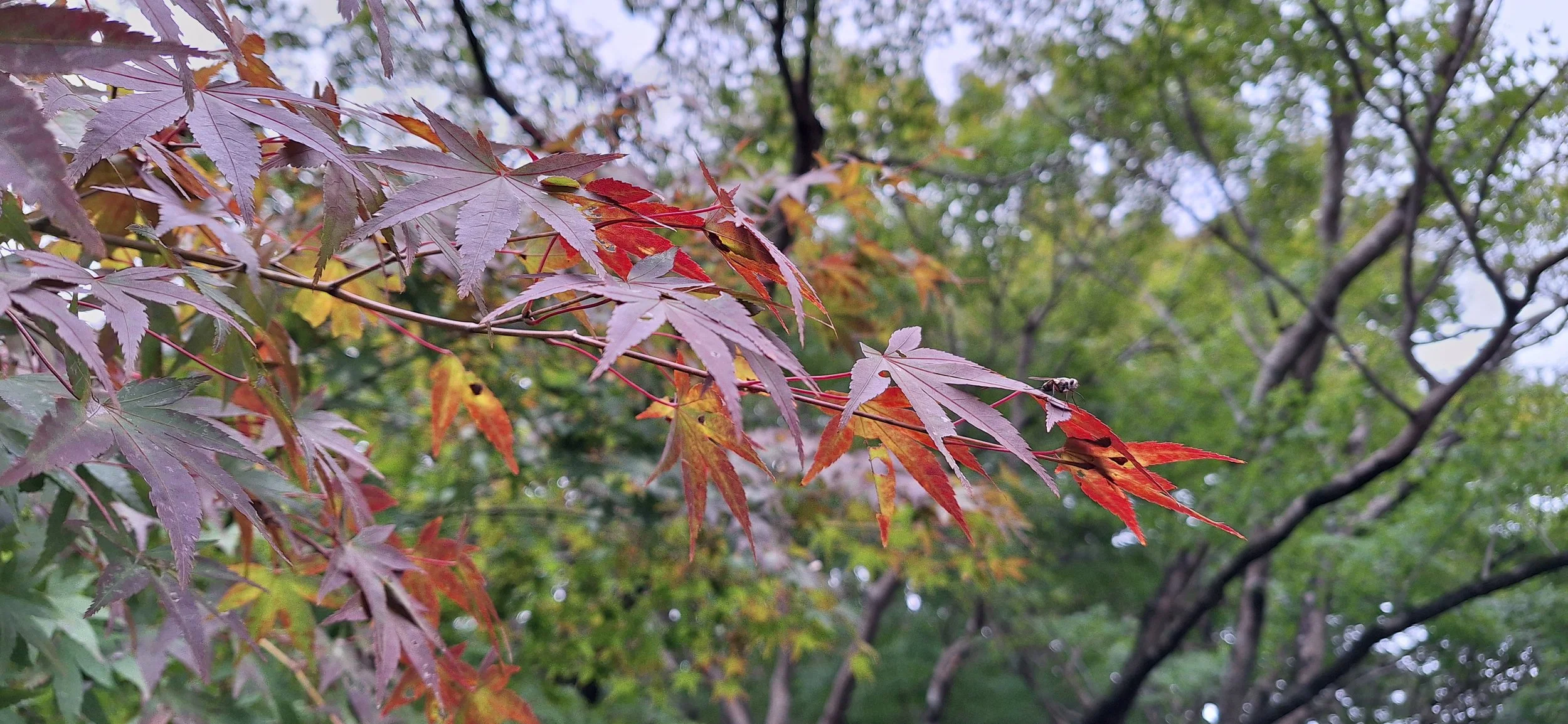
A maple tree turning red outside Mori Museum. One of the four National Treasures housed at the museum is Sesshu’s long landscape scroll, Landscapes of The Four Seasons.
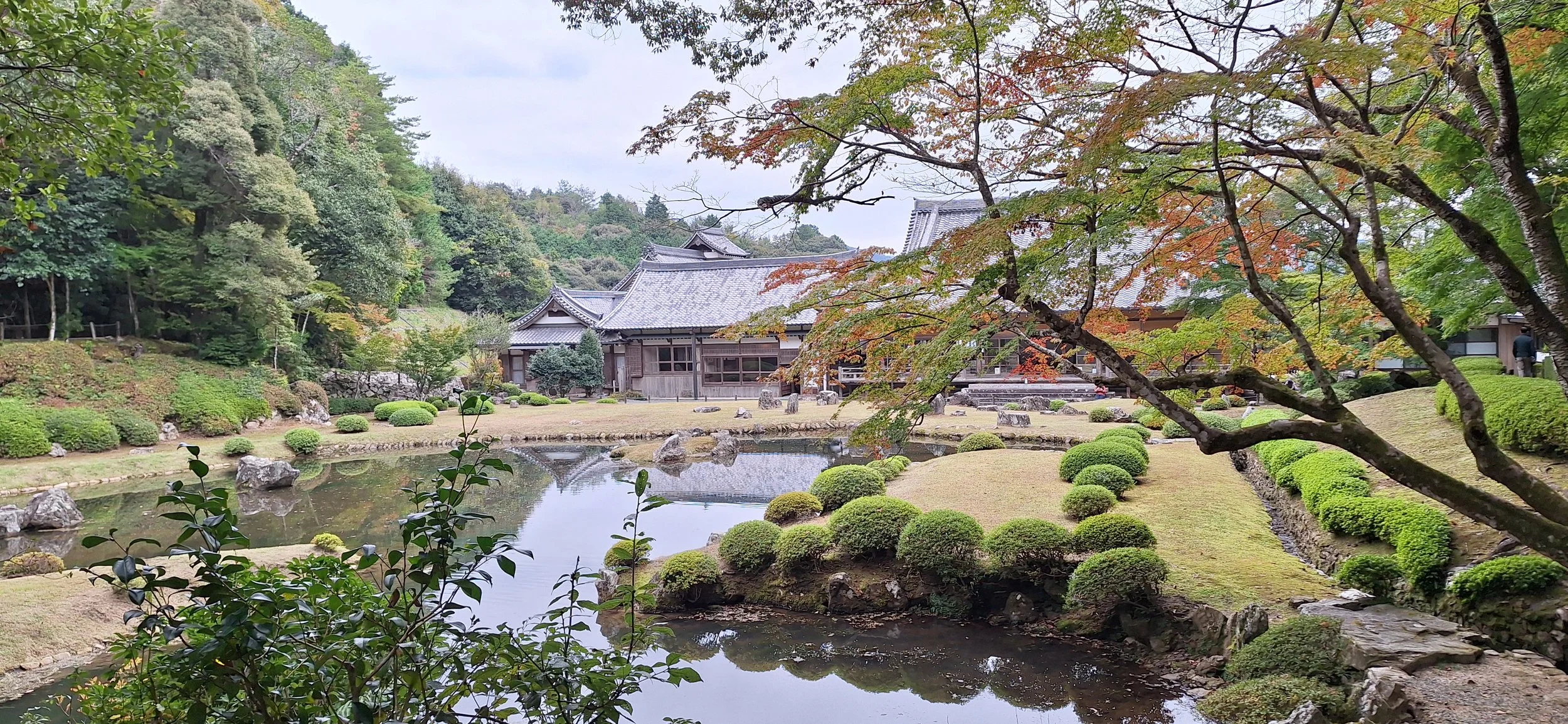
Noting the red hues coming through on a maple tree in the gardens at Joei-ji
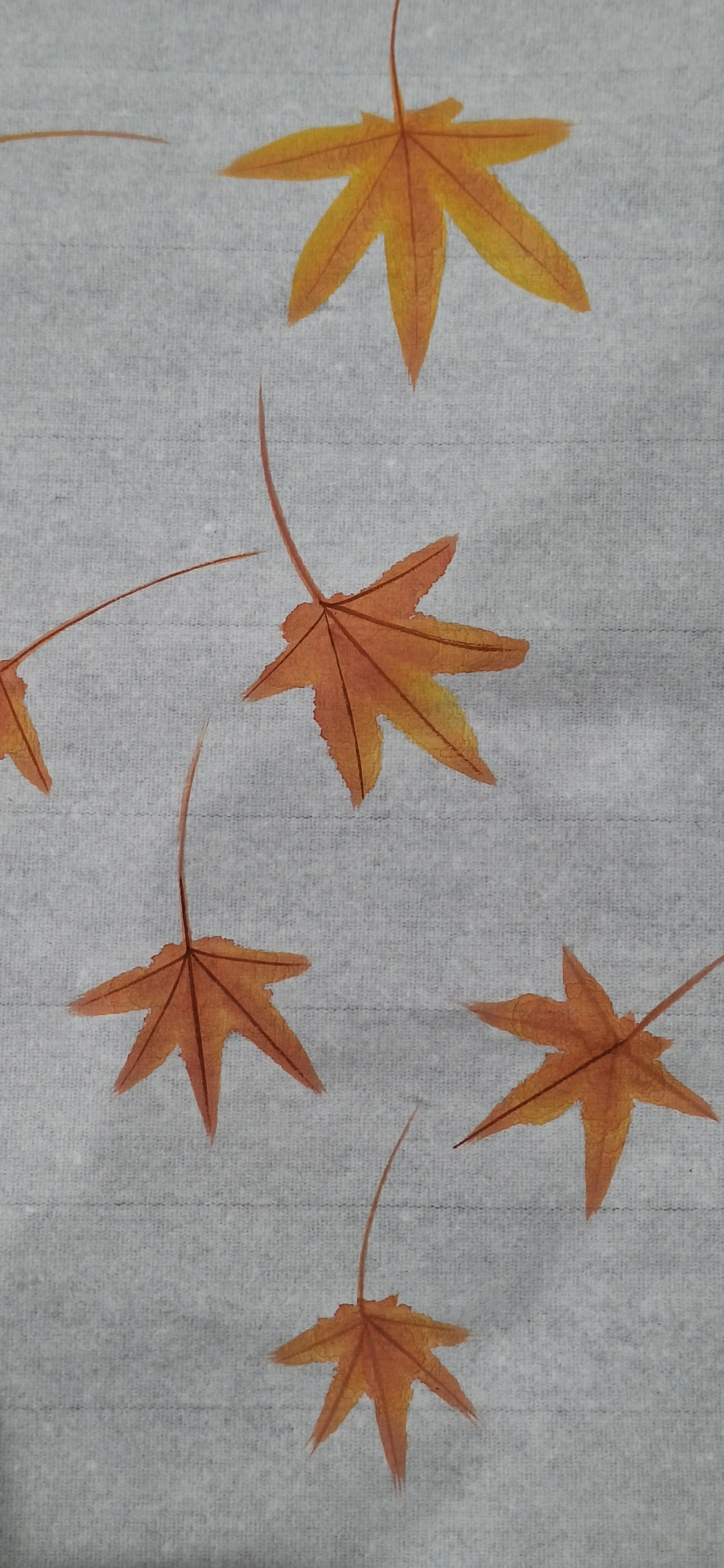
I may have not got the shape of the leaves right at this stage, but I was loving the gentle blending of yellow, orange, red and brown.
After practising my daruma, I painted a stylised scene of maple leaves falling in front of the viewer, I also added a mountain scene, evocative of Akiyoshidai plateau with the sun setting in the sky. The mizu bokashi technique was used to create the sun.
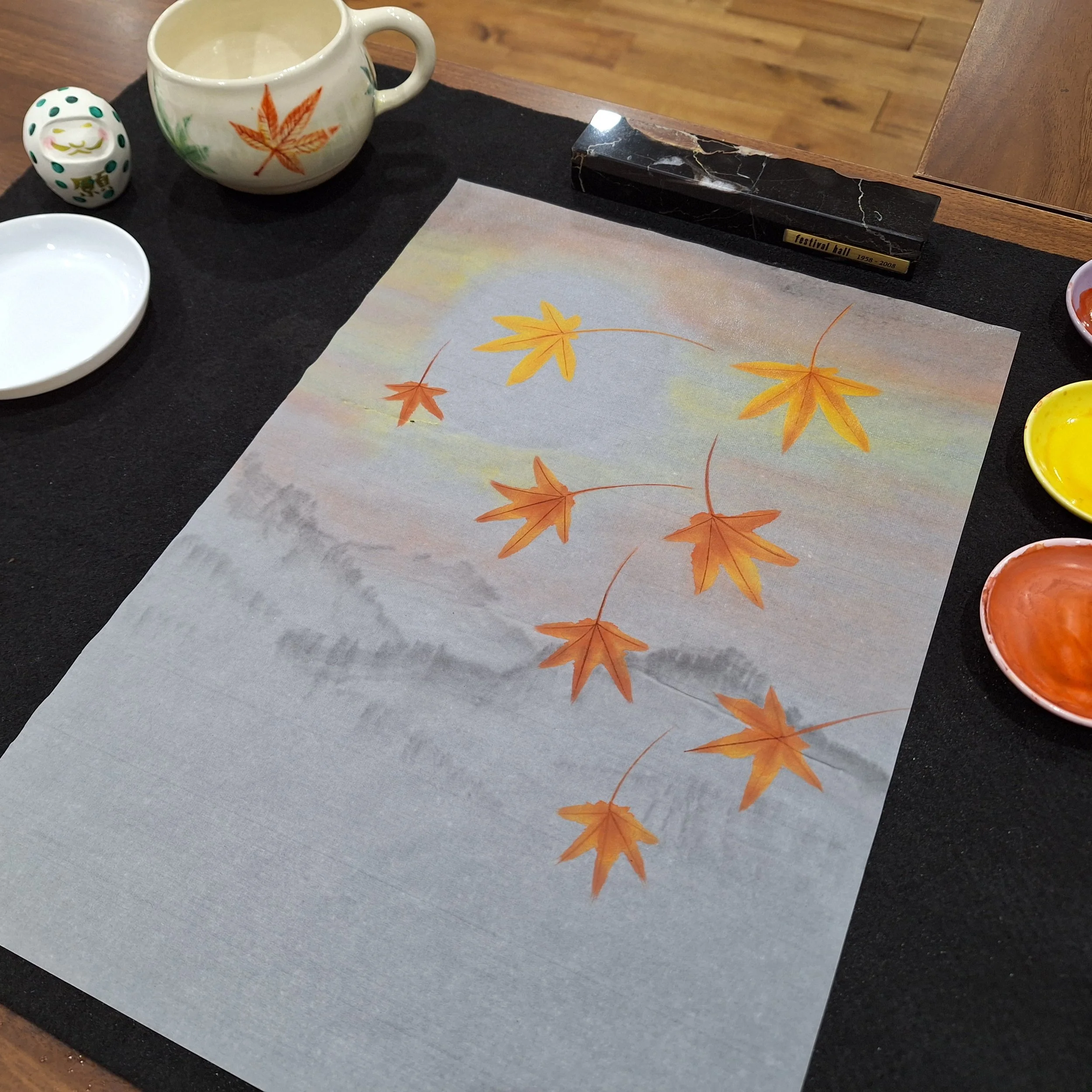
With the subtle and seamless graduation in my use of warm colours, I felt that my practise and patience to achieve the desired effect was paying off.
We had reached the end of lesson 11, and even though we were all tired, we all stayed up late to bin our practise sheets and get some semblance of order with our work. Akemi told us that we were to select five pieces of work that we would like to mount for our final lesson. As you can imagine, late at night, and after many days of intense work, I ended up experiencing decision fatigue, but the group helped me to narrow down my choices.
On the second to last day, Akemi guided us through the very special process of making our own seals!
Some of you may know that I commissioned Akemi to carve three seals (also known as inkan, hanko or chops) back in 2023. I did bring them along with me, but understandably Akemi was keen for us to learn every technique and I was excited to give carving a go… It’s tricker than it looks!
Akemi showed us examples of seals she had designed and created, and then we looked through a kanji dictionary that charted the “evolution” of kanji, from ancient pictographs to modern day kaisho script. I settled on Phoenix 鳳 in bone oracle script, which appealed because it looked rather abstract to me.
Bone oracle script is considered to be the oldest form of written Chinese, dating to the late 2nd millennium BC! Inscriptions were made by carving characters onto bones and shells for divination purposes. I love how this character reaches back thousands of years to a time where people were trying to make sense of the world around them, using script as a method of trying to foresee or gain insight. A real sense of the mystical!
So with our chosen style sketched out, we selected our soapstone and sanded them to prepare for carving. We used thin paper to trace and transfer the reversed (mirrored) design onto our soapstone, but I must admit that I messed this stage up a couple of times. I felt the transferred design wasn’t balanced, so I painted my design directly onto the soapstone instead.
We carved our designs using a chisel. In Japanese, the process of carving the design is known as hakubun. If I was to carve the negative space instead, that is called shubun. Numerous 1mm adjustments were made using the chisel. The carving process is fine and precise, so if a mistake is made, it does show up. I did make a slight mark in the wrong place, but for my first attempt it was bound to happen!
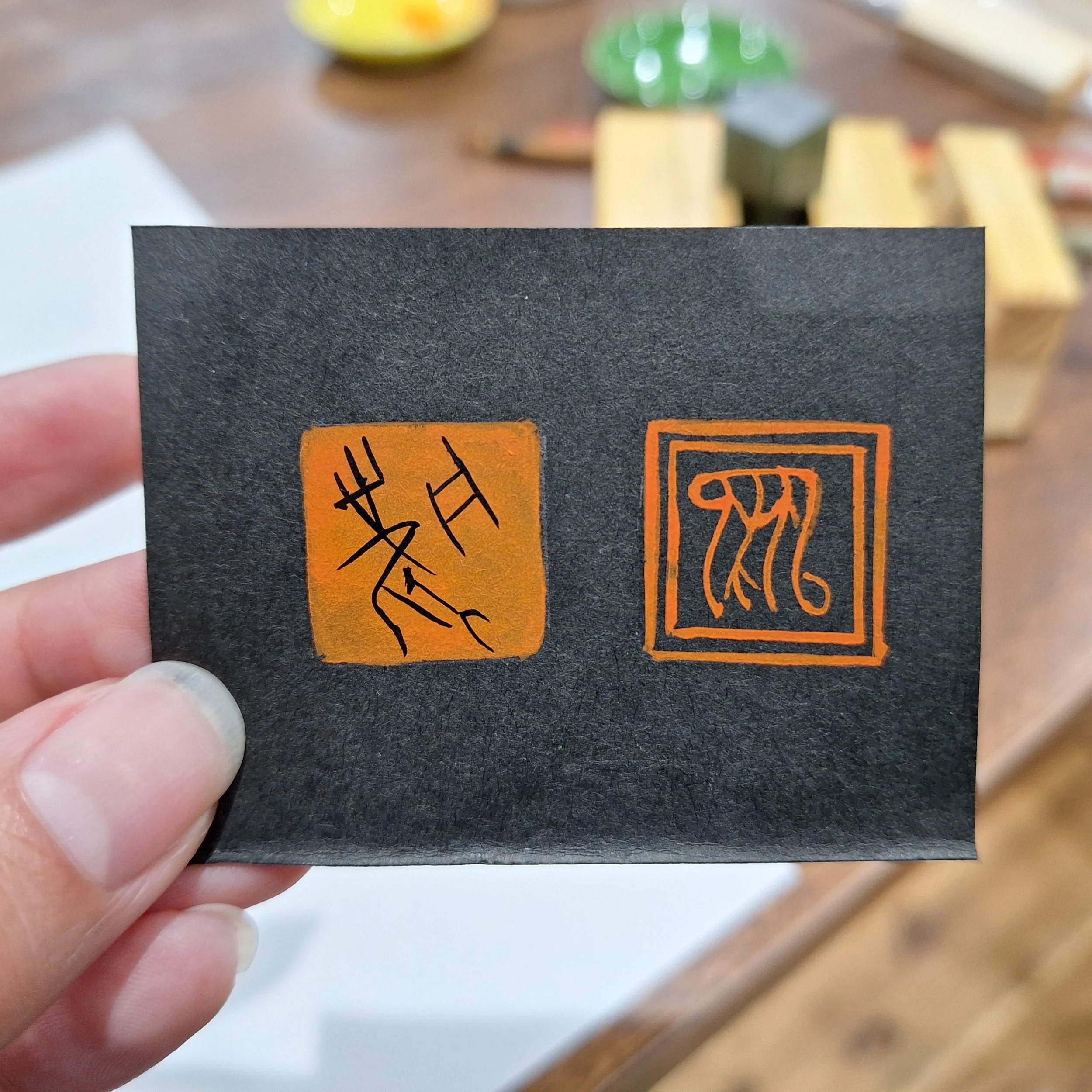
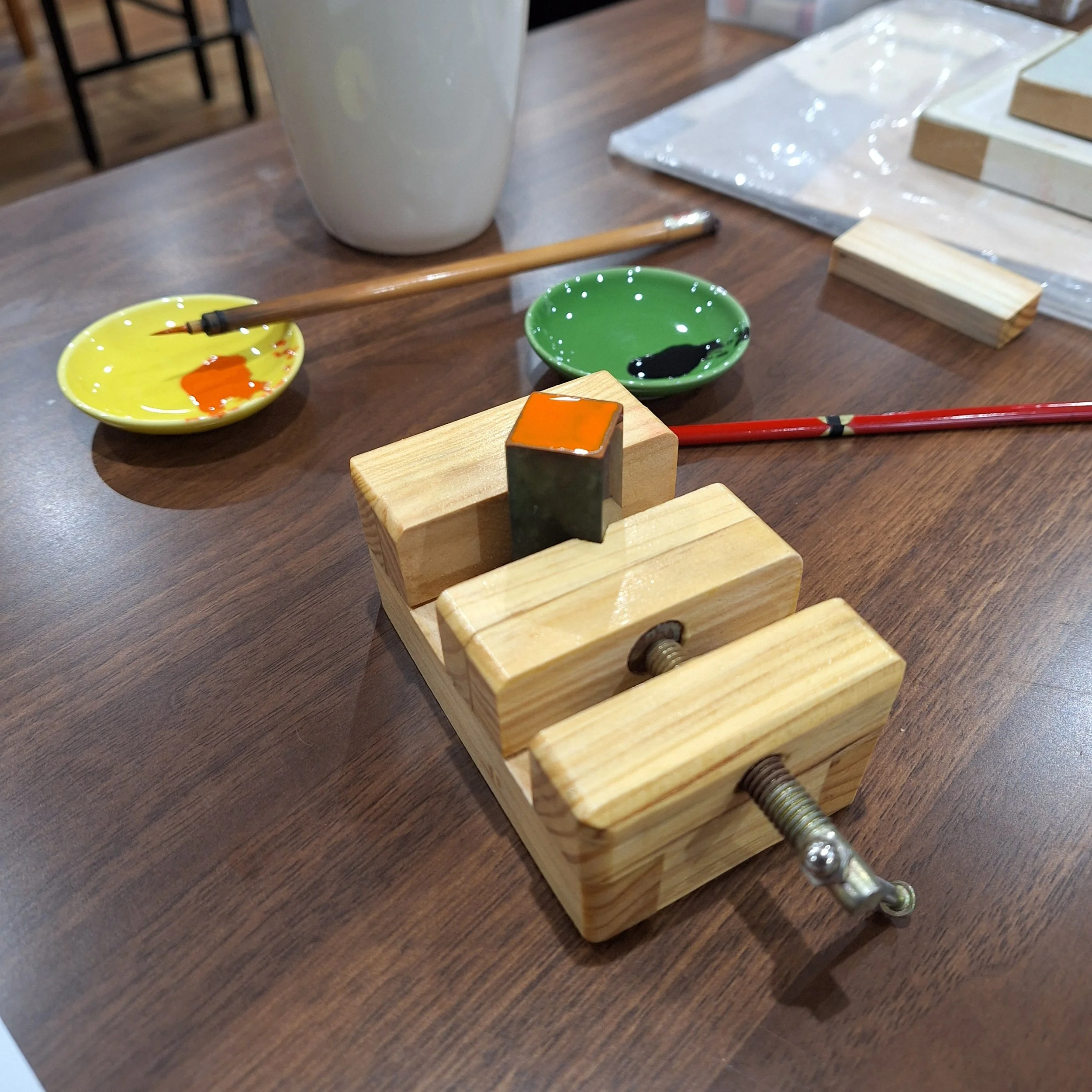
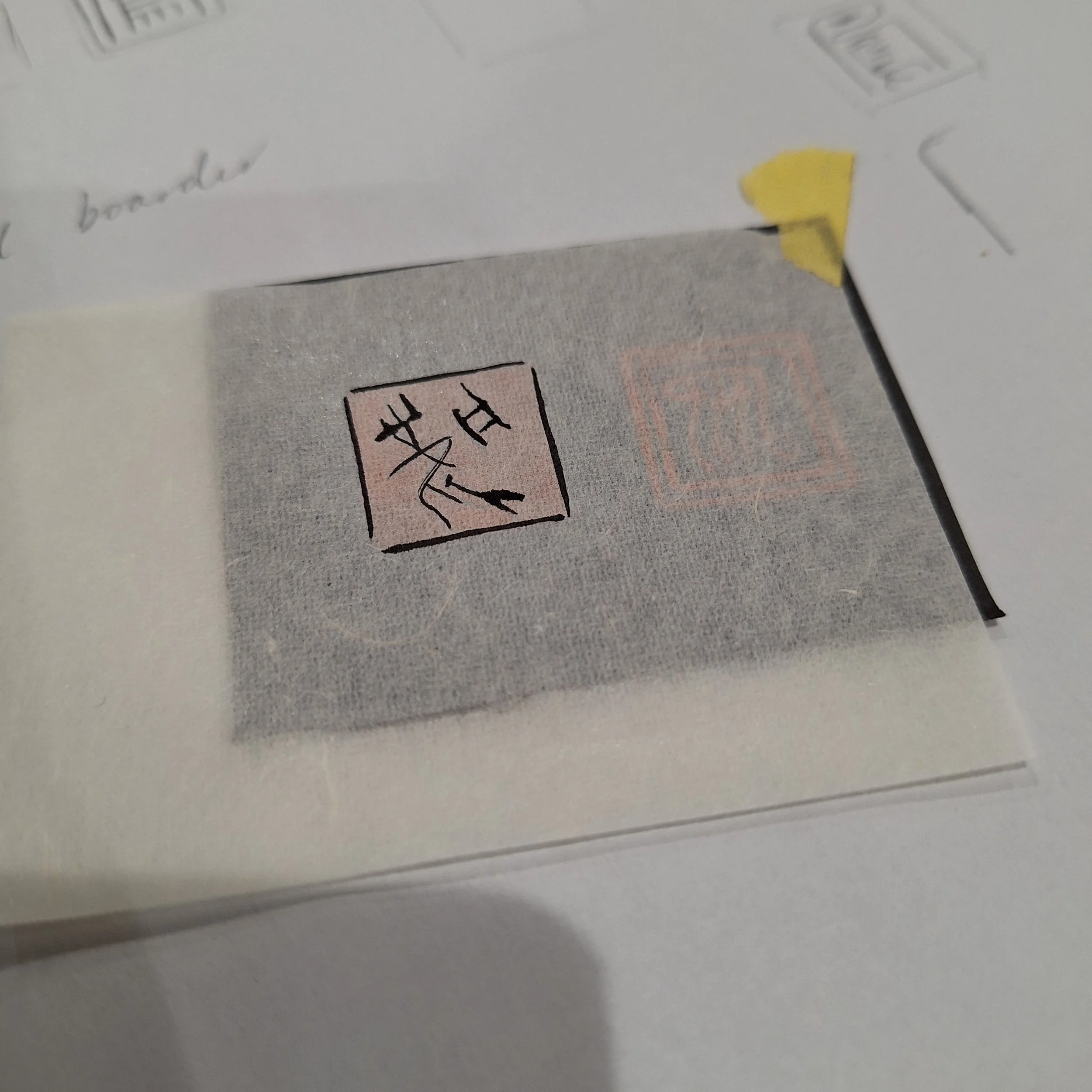
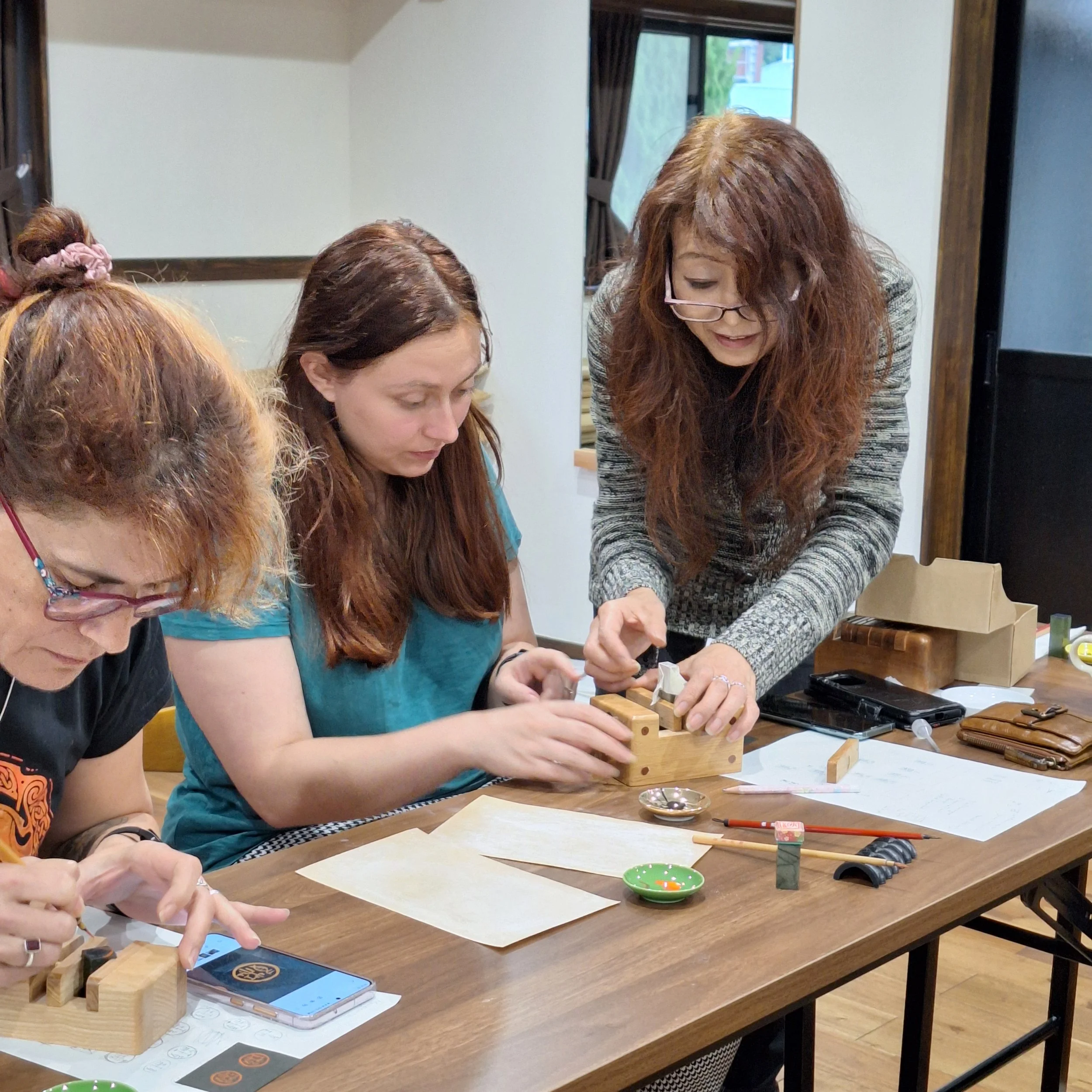
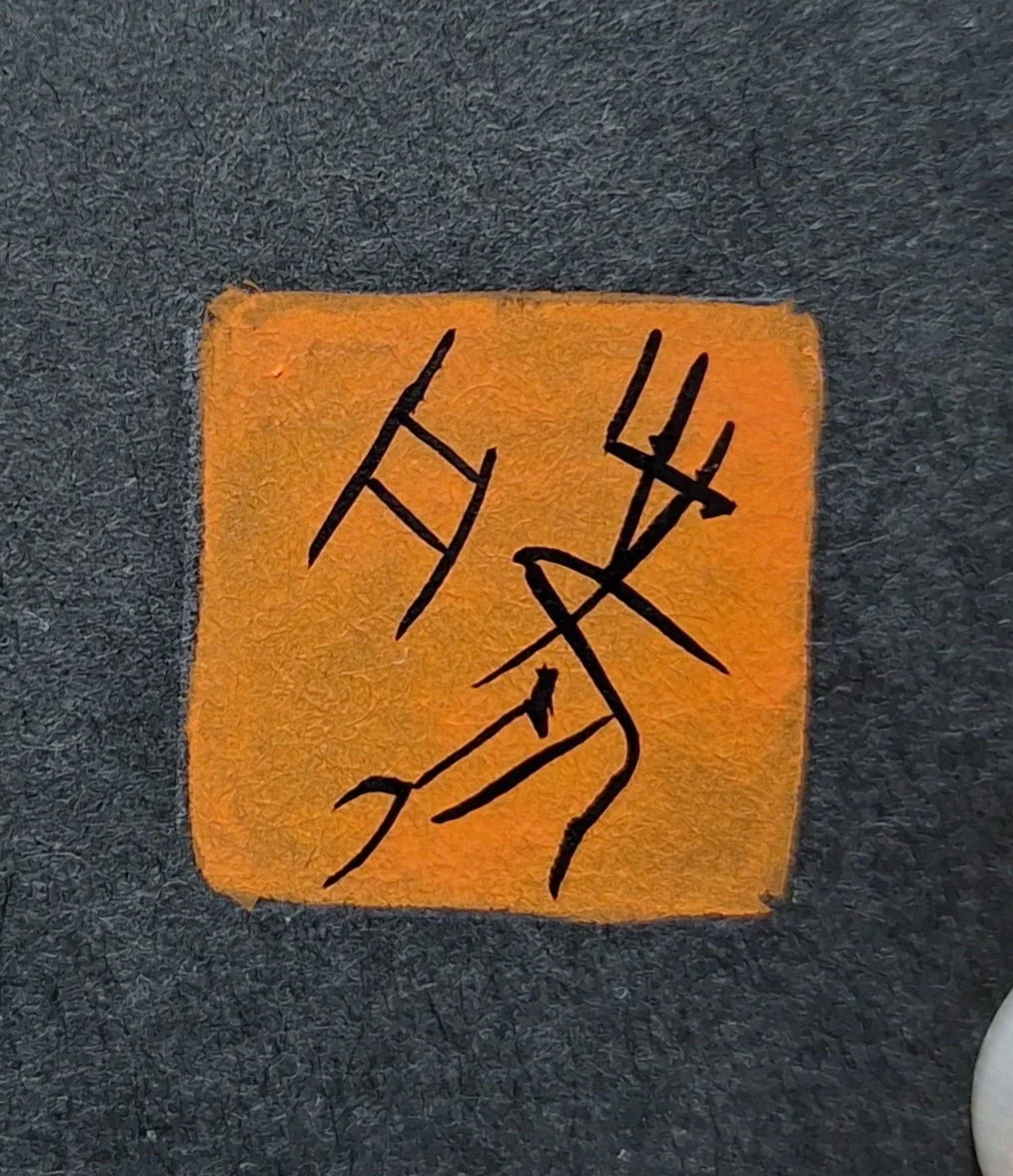
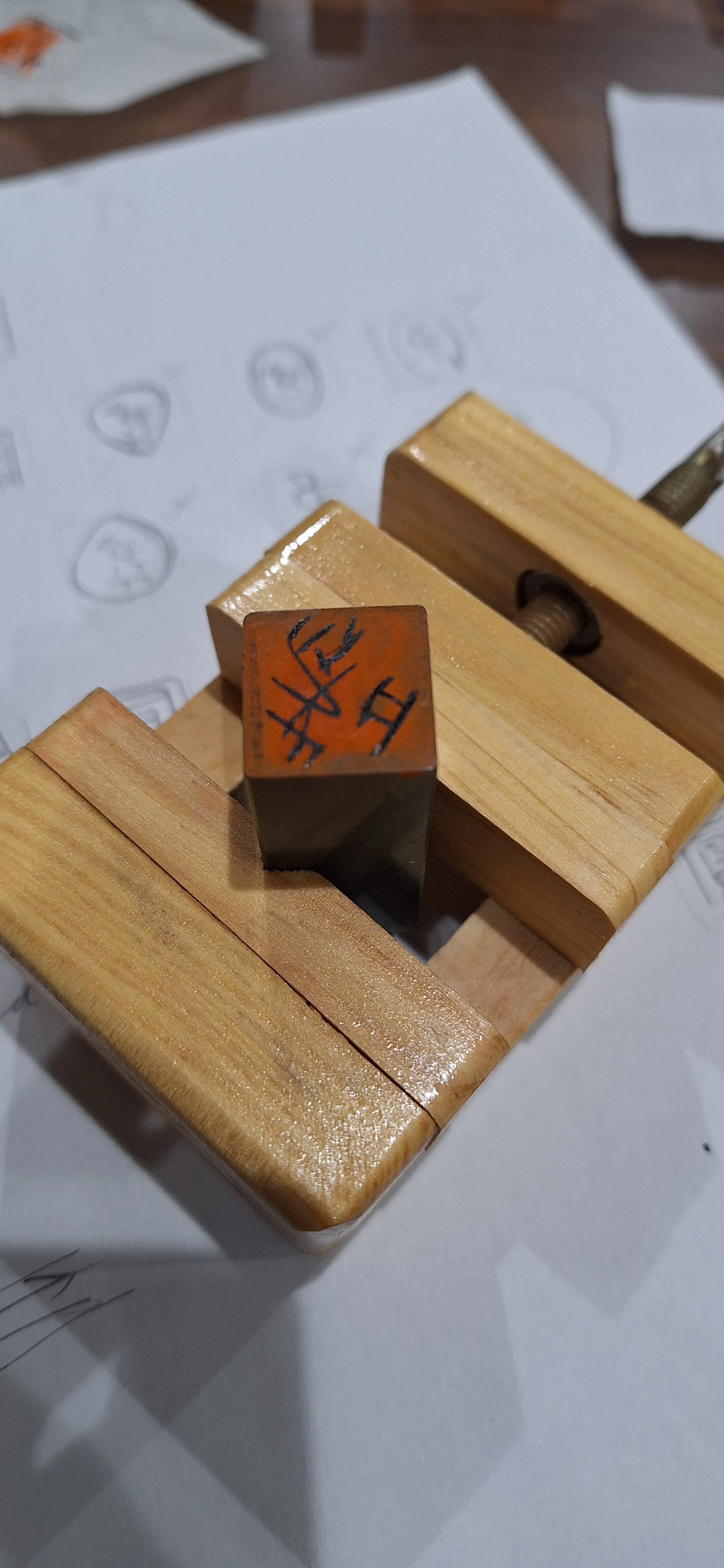
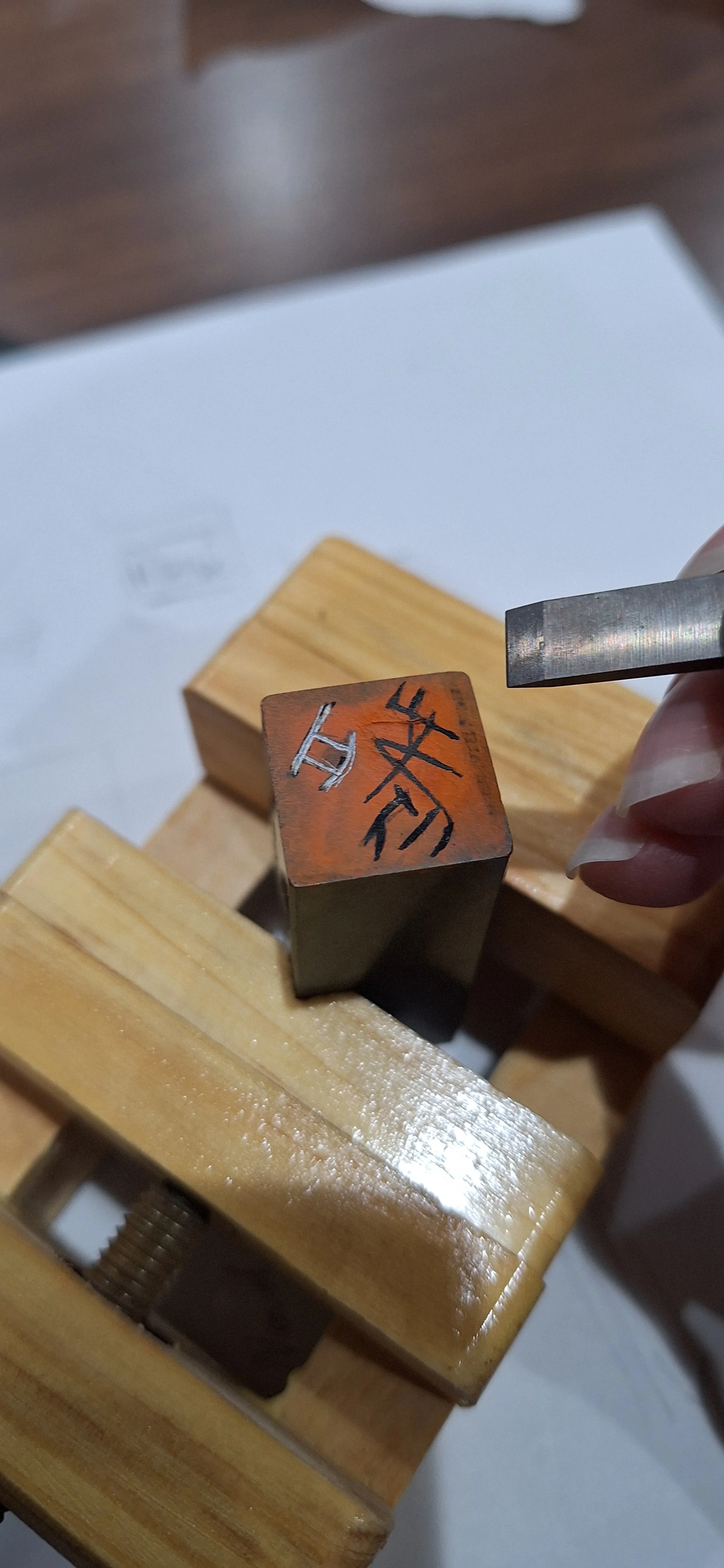
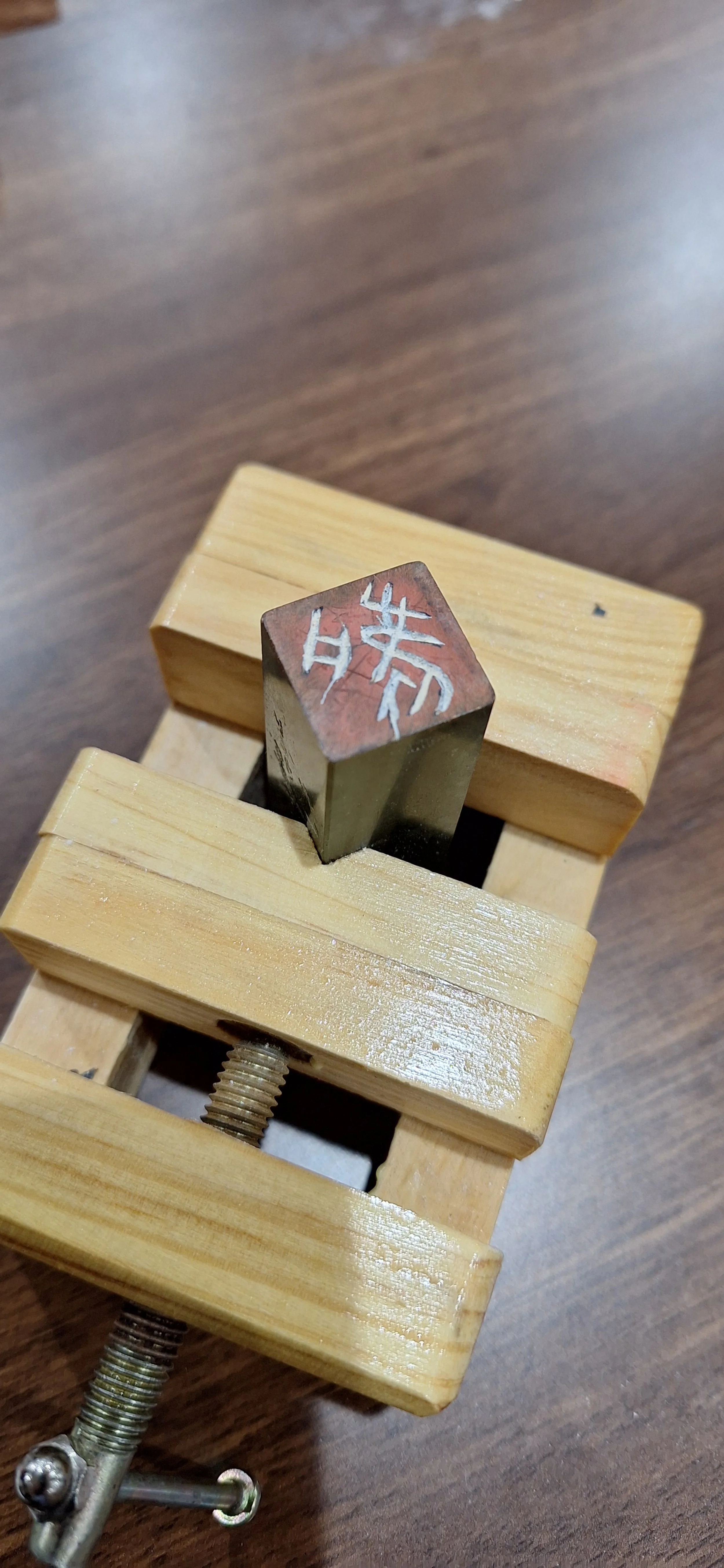
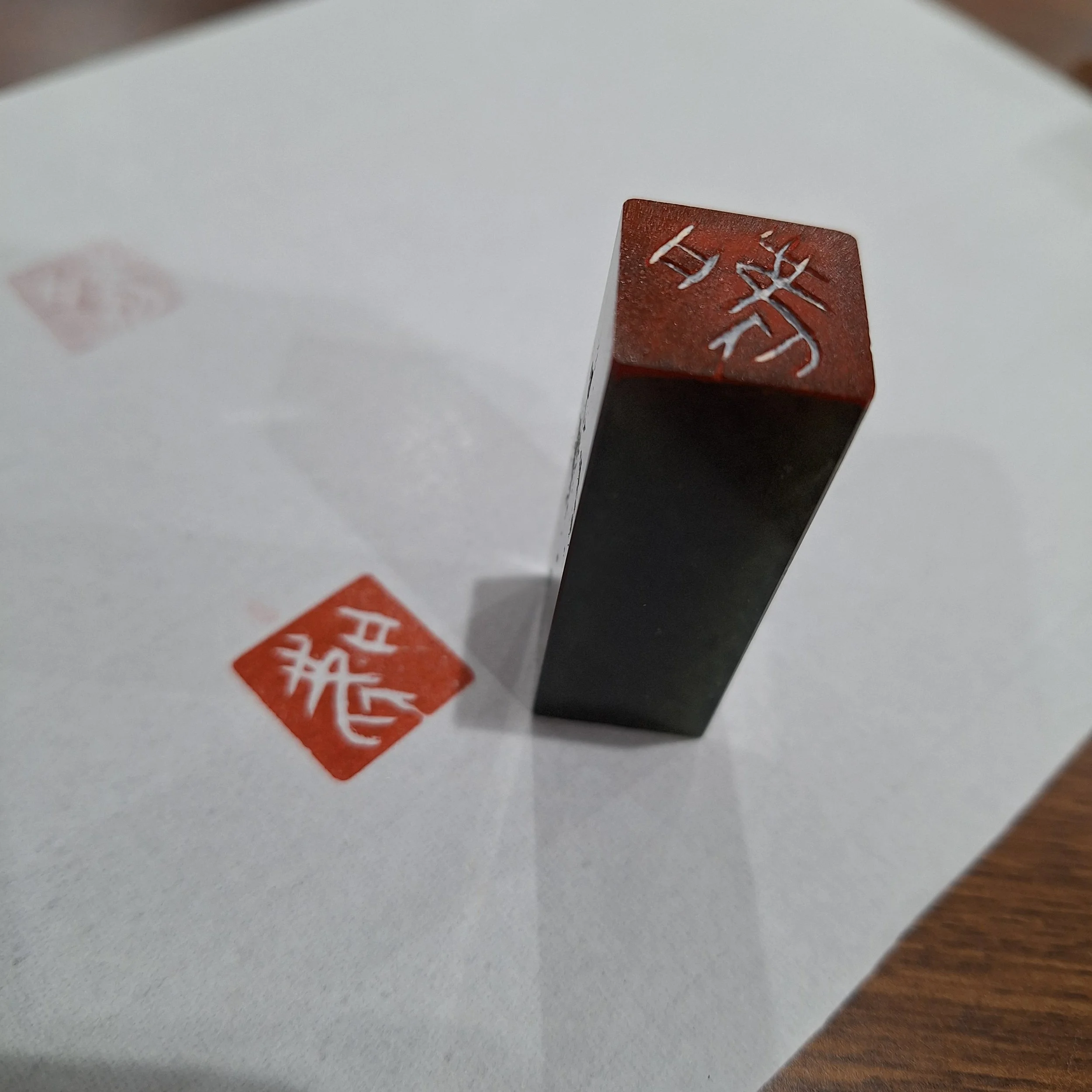
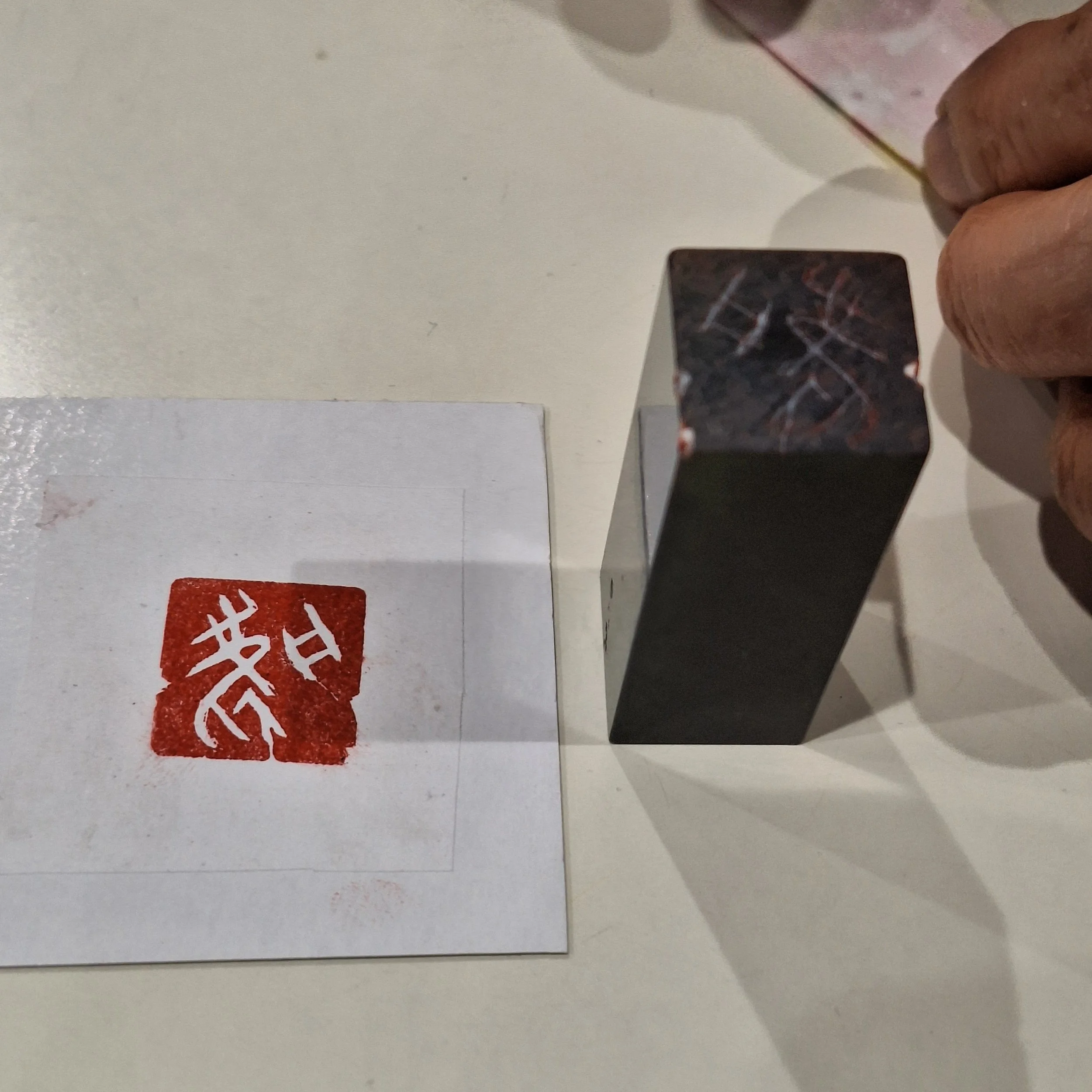
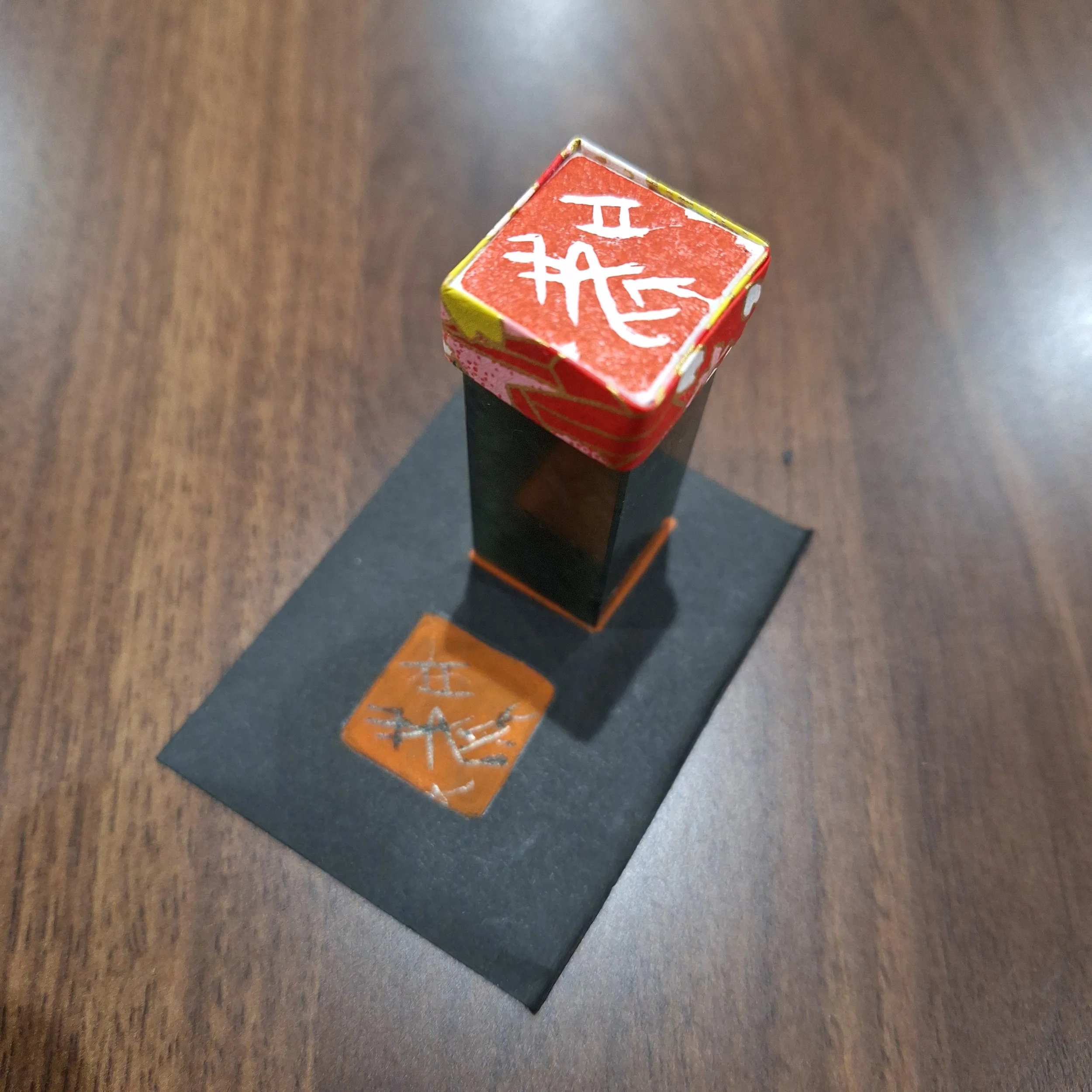
I think the most tense moment was when Emily suggested I try a technique that deliberately chips the edges and corners of the seal to give it an “ancient look”. This is known as gekihen 撃辺.
Using a chisel and hammer I proceeded to “attack” my seal. Too much force could lead to disaster! Not enough force could result in marks that look like bad carving. Even though I was unsure of my efforts, it worked out well and I was please with the results when I tested it out!
Hand carving ensures that the seal will be unique to the artist. Even though the design is based on oracle bone script, the carving process is a form of self-expression and personal identity in it’s own right, and takes the place of a written signature.
After our hard work, it was time to celebrate! That evening, Akemi and the Koshu Dream House Team hosted a farewell party for us!
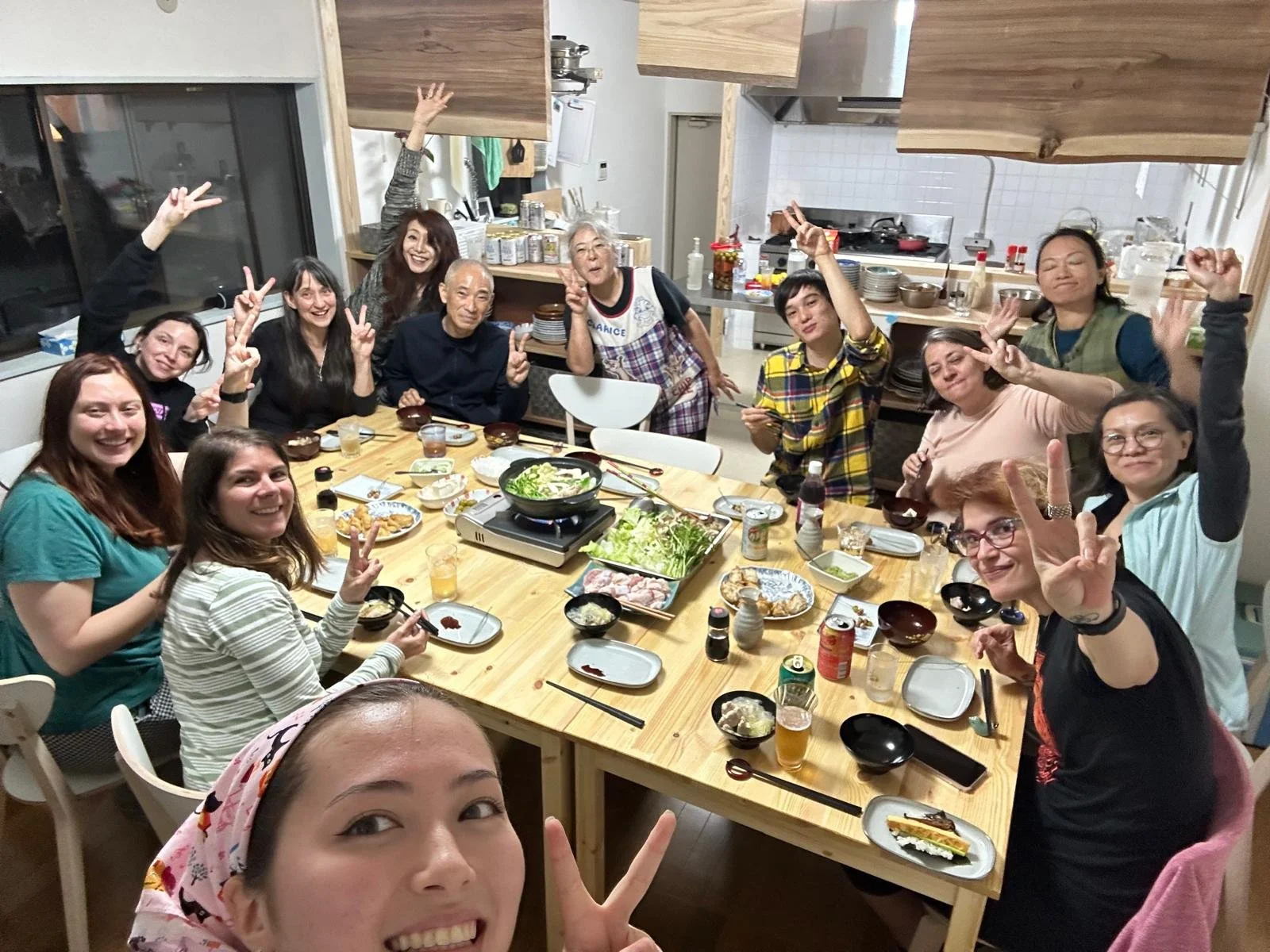
Looking back at these photos makes me so happy… so many special memories were made. That night, we laughed, danced and shared our joy!
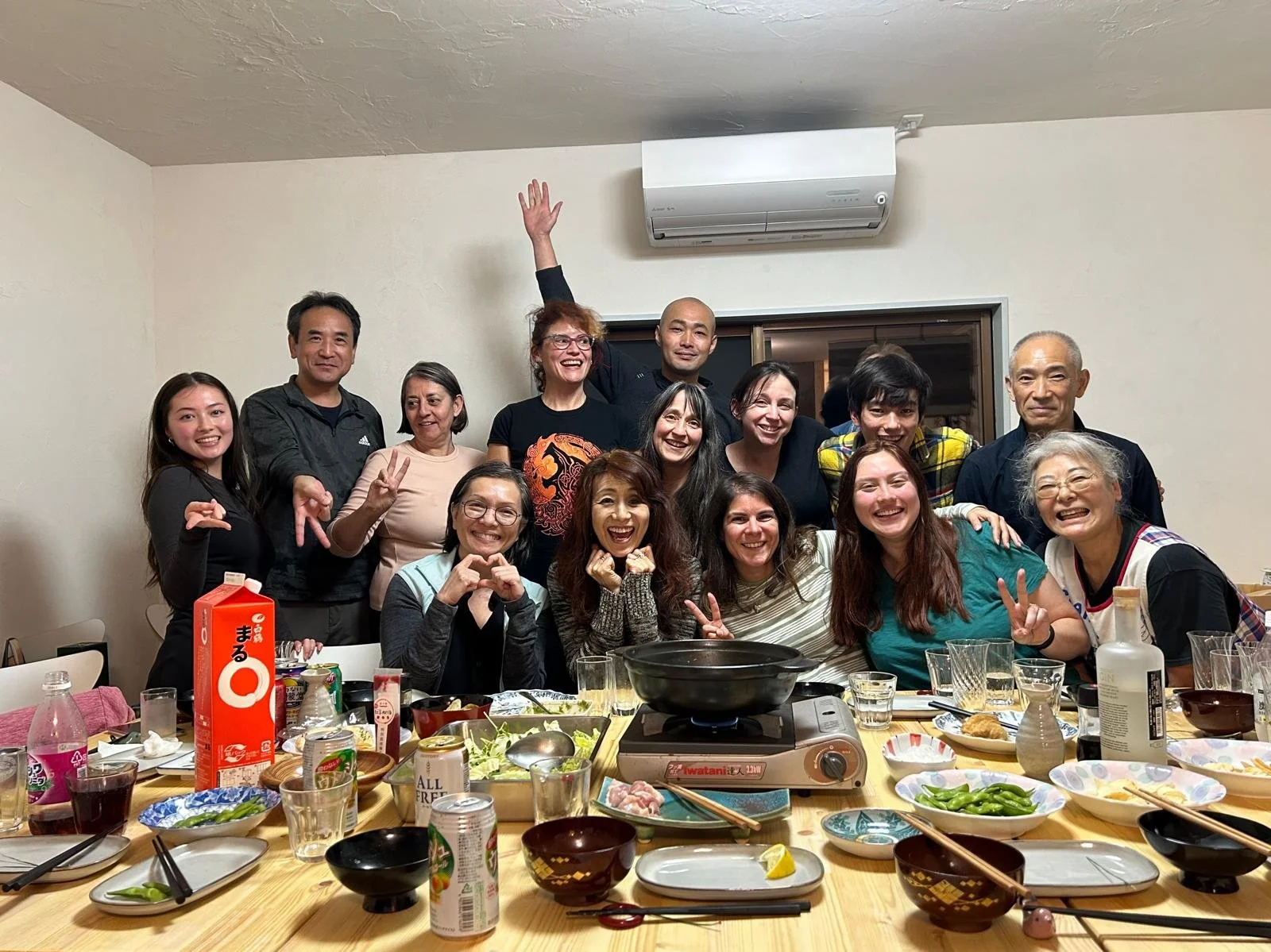
The Dream Team! From left to right, we have Leanne, Isami, Debroha, Margarita, Kenji, Helen, Alison (Ali), Fidel, Hisao, Alina, Akemi (Koshu), myself, Emily and Saty! Chiemi, Jun, Machako and Steve, though not present in this photo, were also part of the amazing Dream Team.
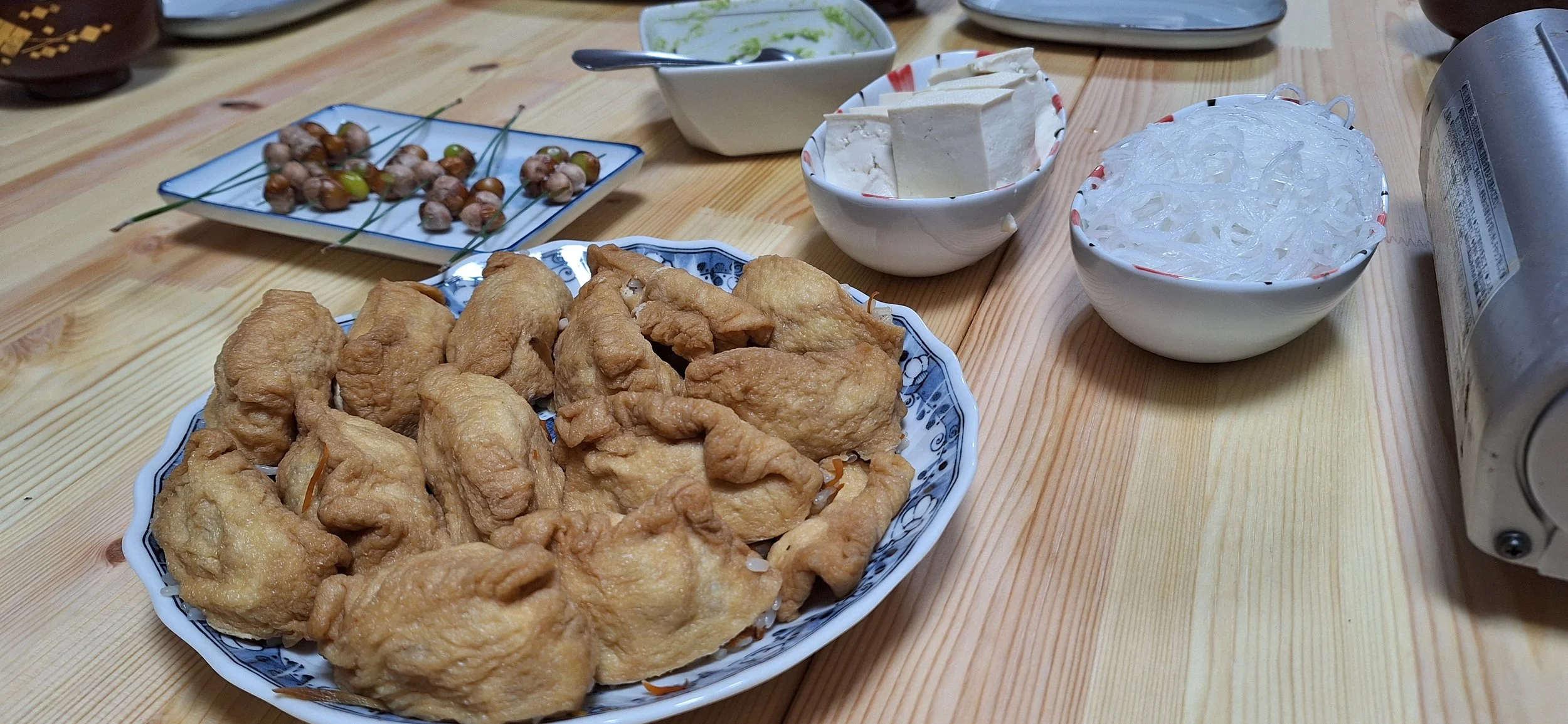
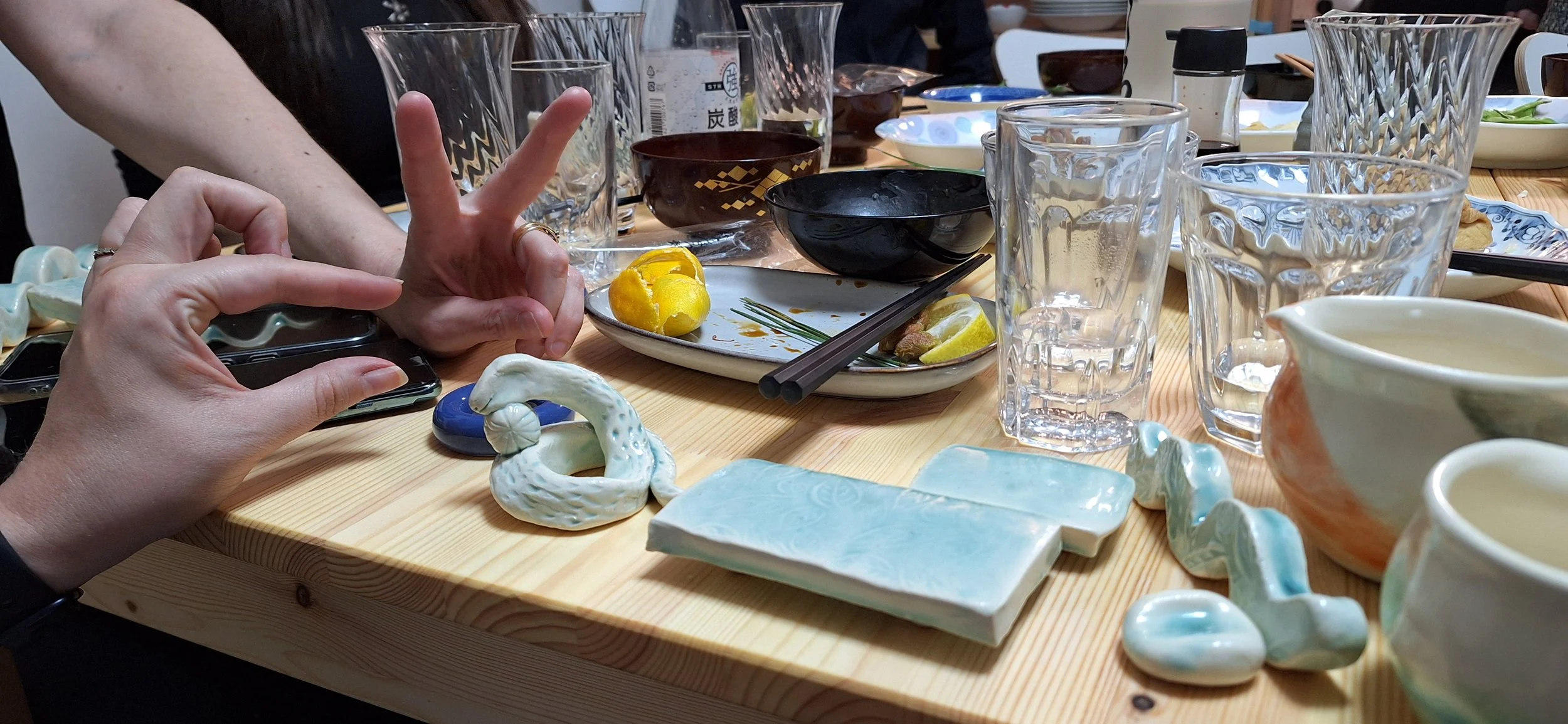
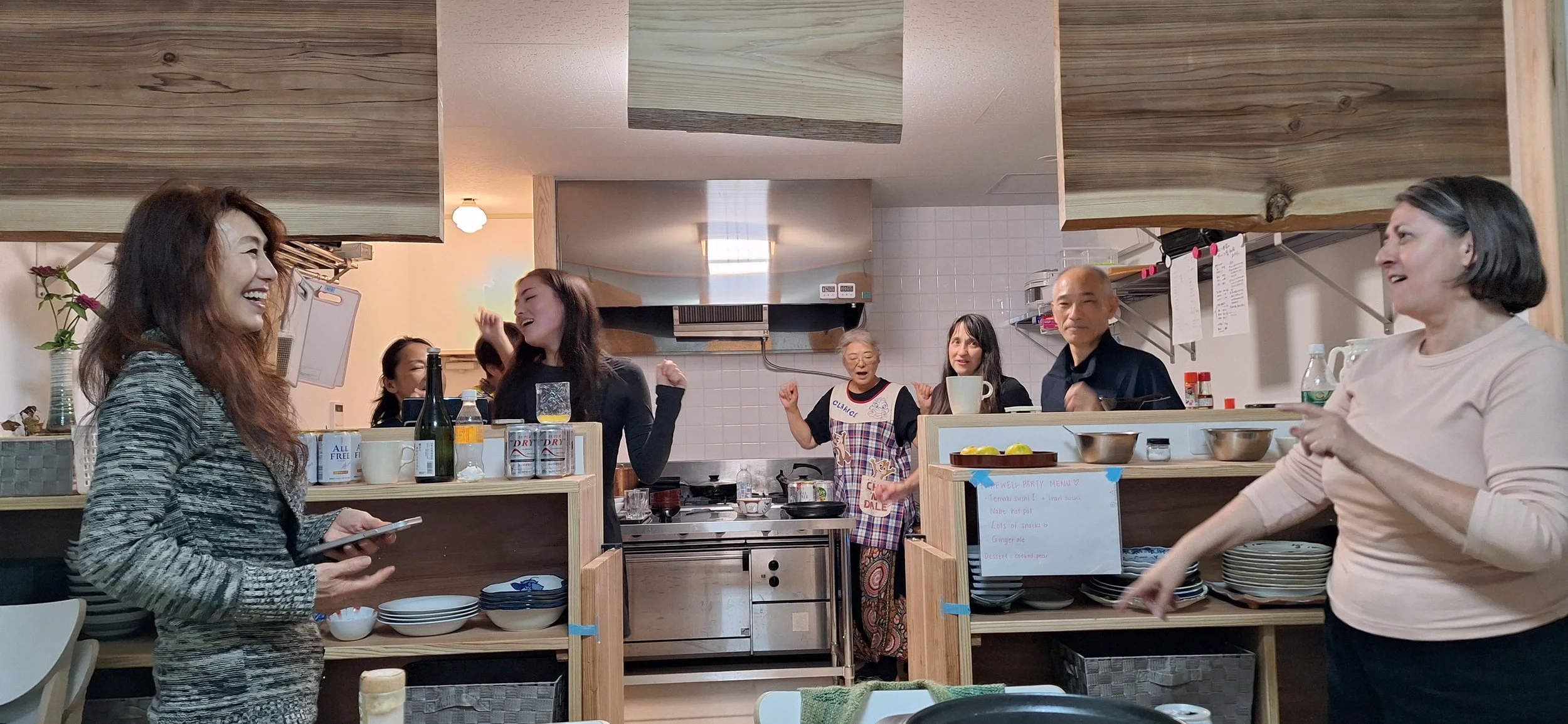
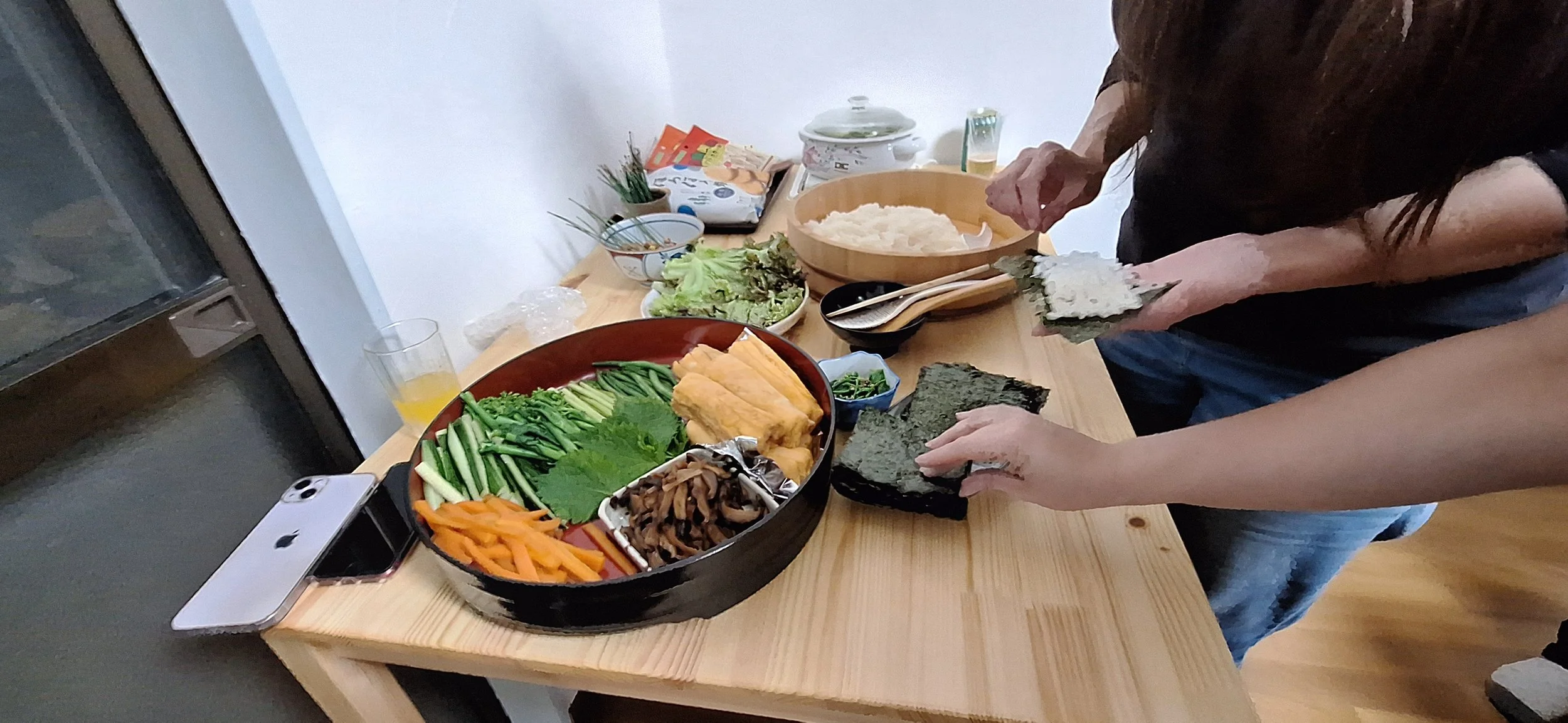
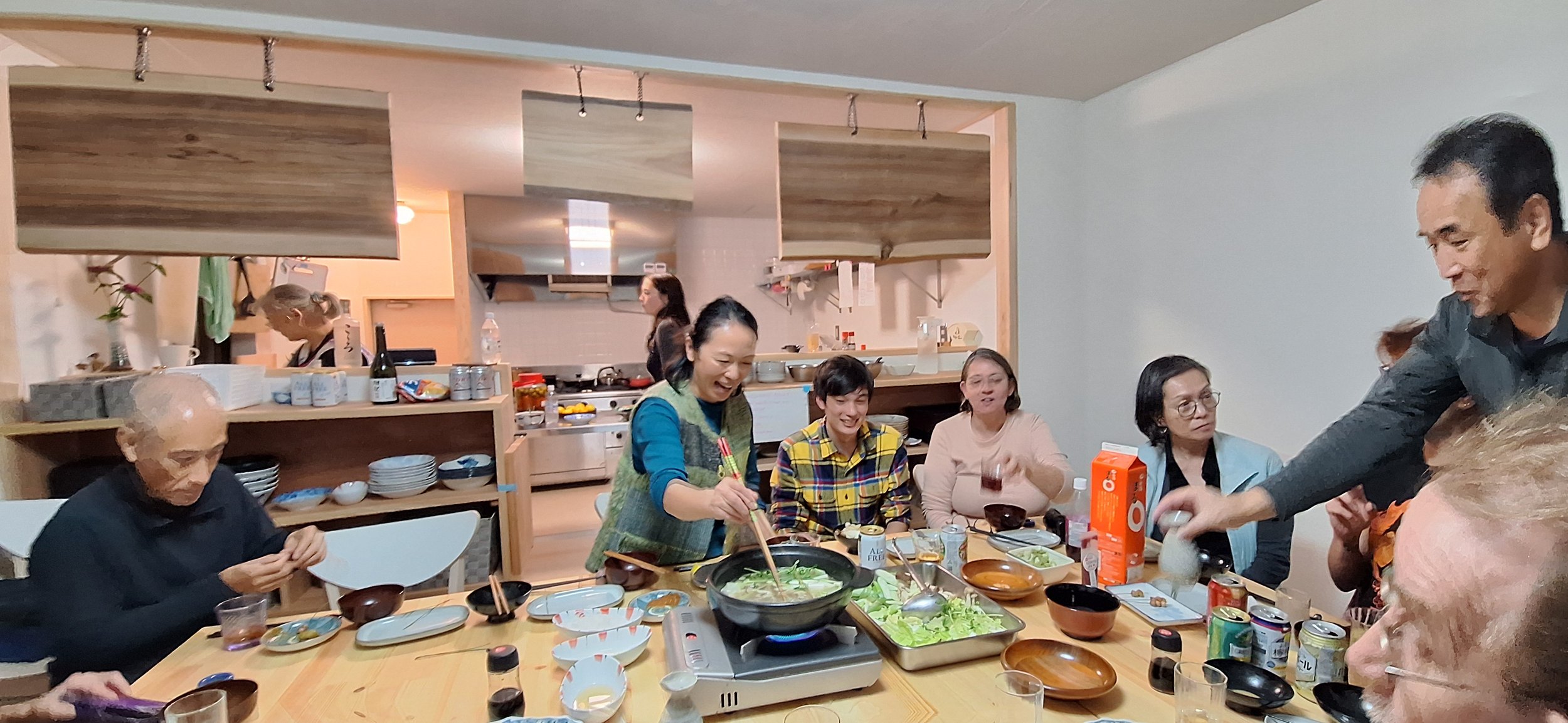
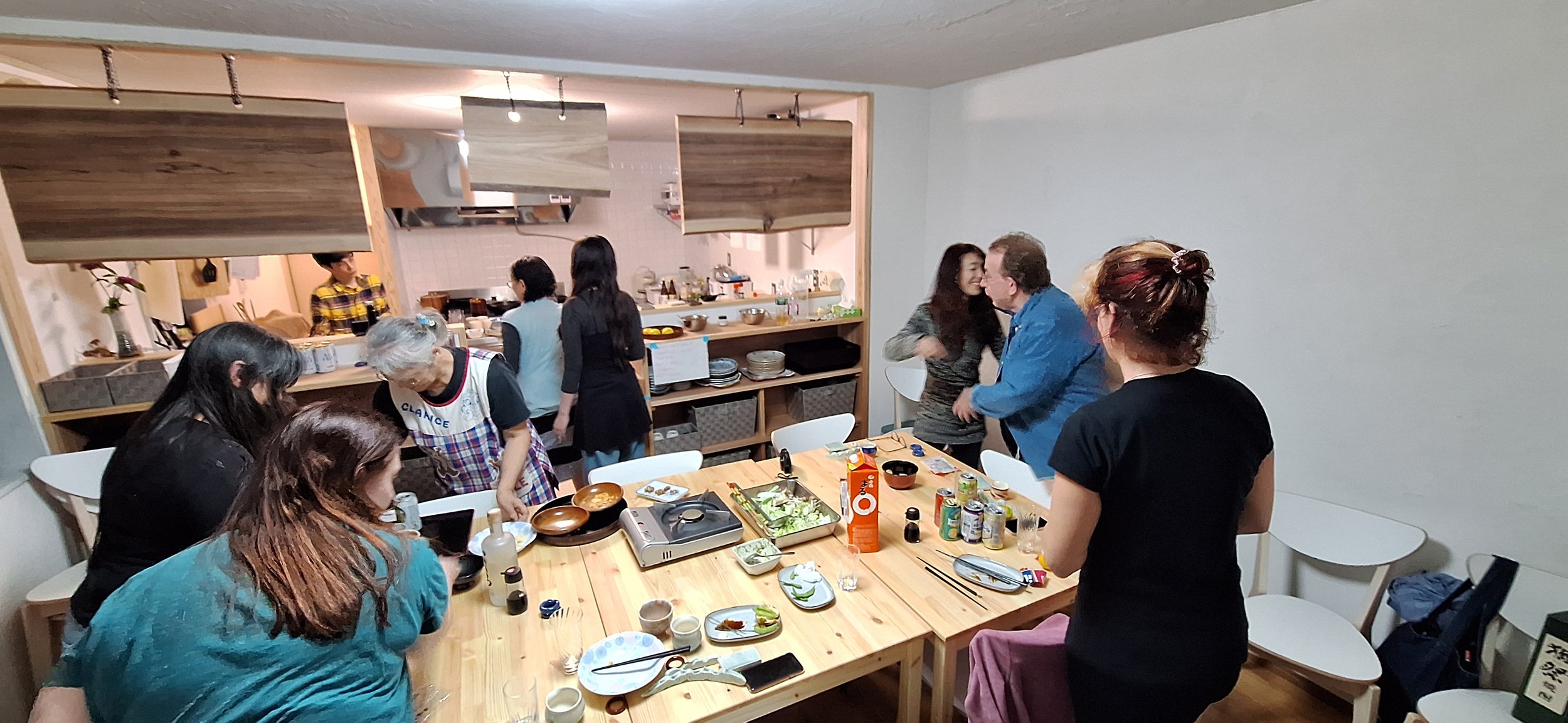
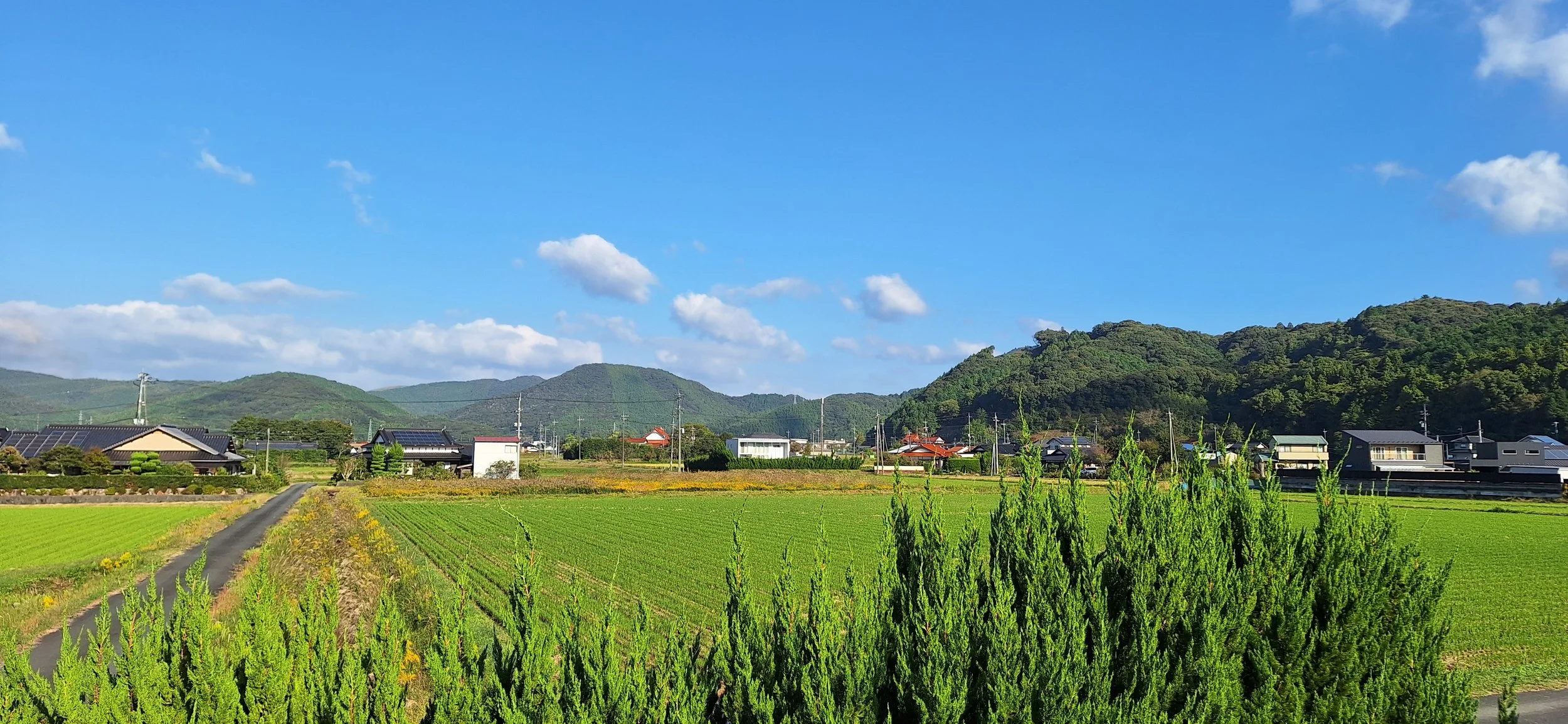
On our last day at Koshu Dream House. We woke to a beautiful blue sky and bright sunshine.
Even though it was our last day, we still had one final lesson, and it was learning the process of how to mount our artwork.
Japanese calligraphy and sumi-e paper typically creases when ink is applied. To prepare the artwork for framing, the final step is to add the supporting paper. This process is called urauchi, and it involves dampening the artwork, flattening it and then backing it onto the supporting paper known as urauchi gami. There is a traditional method, but as students new to the process, we used supporting paper with pre-applied glue, called noritsuki urauchi gami. This paper sticks directly to the back of the artwork, with the use of an iron.
It sounds simple, in theory. Unfortunately, I did make one big blunder with one of my artworks. I had torn it previously, and now it had a couple of major creases! I felt I had ruined it. As this particular piece was painted on practise paper (which is wafer thin), there was going to be a high possibility it would tear and crease.
With patience and care, Akemi applied gentle pressure with the iron to remove the worst of the air bubbles, and it didn’t look so bad! Phew!
After repeating the process of urauchi four more times, I then calligraphed my name and carefully placed my seals on each piece… Finished!
There was just enough time to celebrate completing our course with a certificate ceremony!
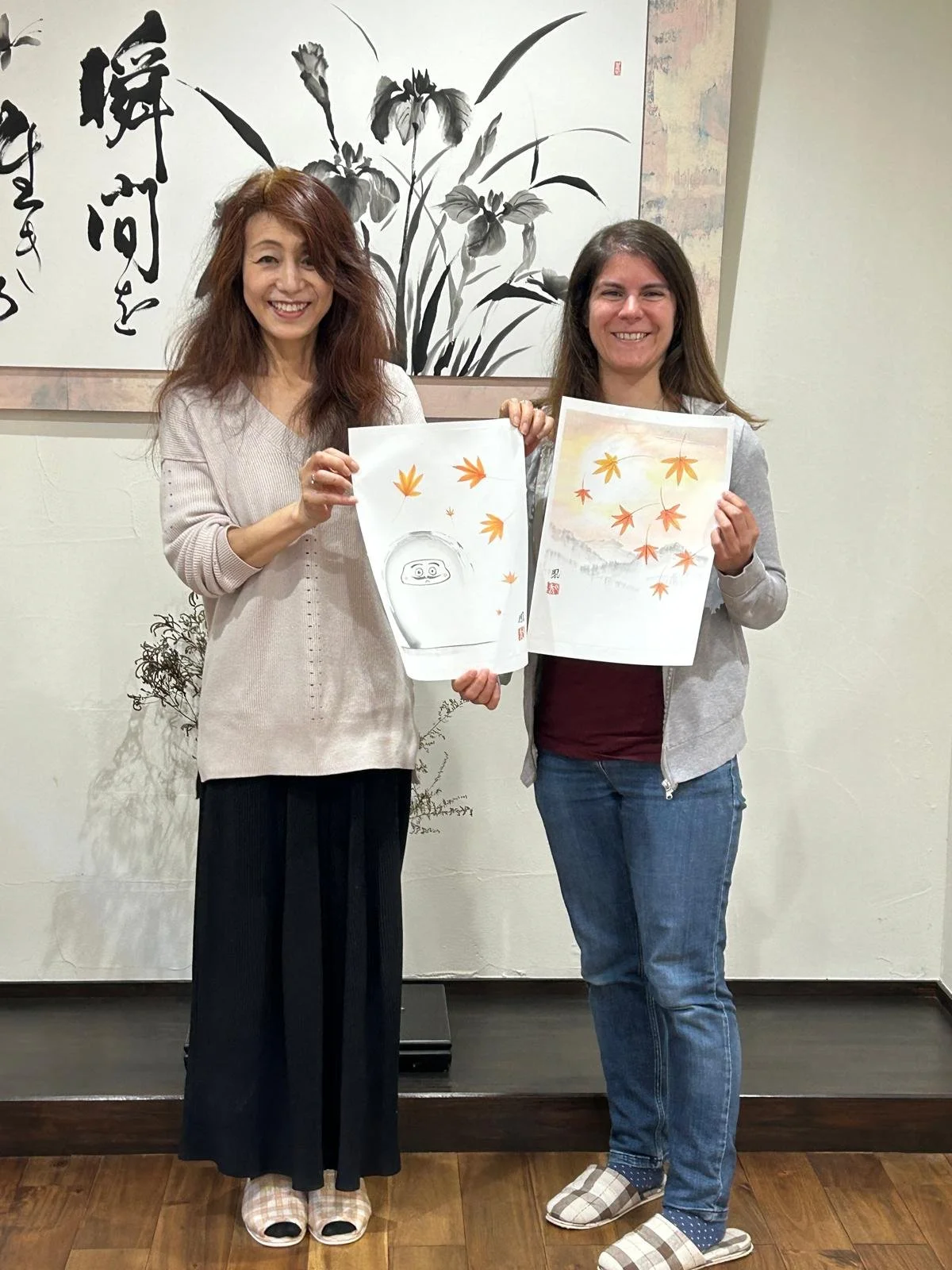
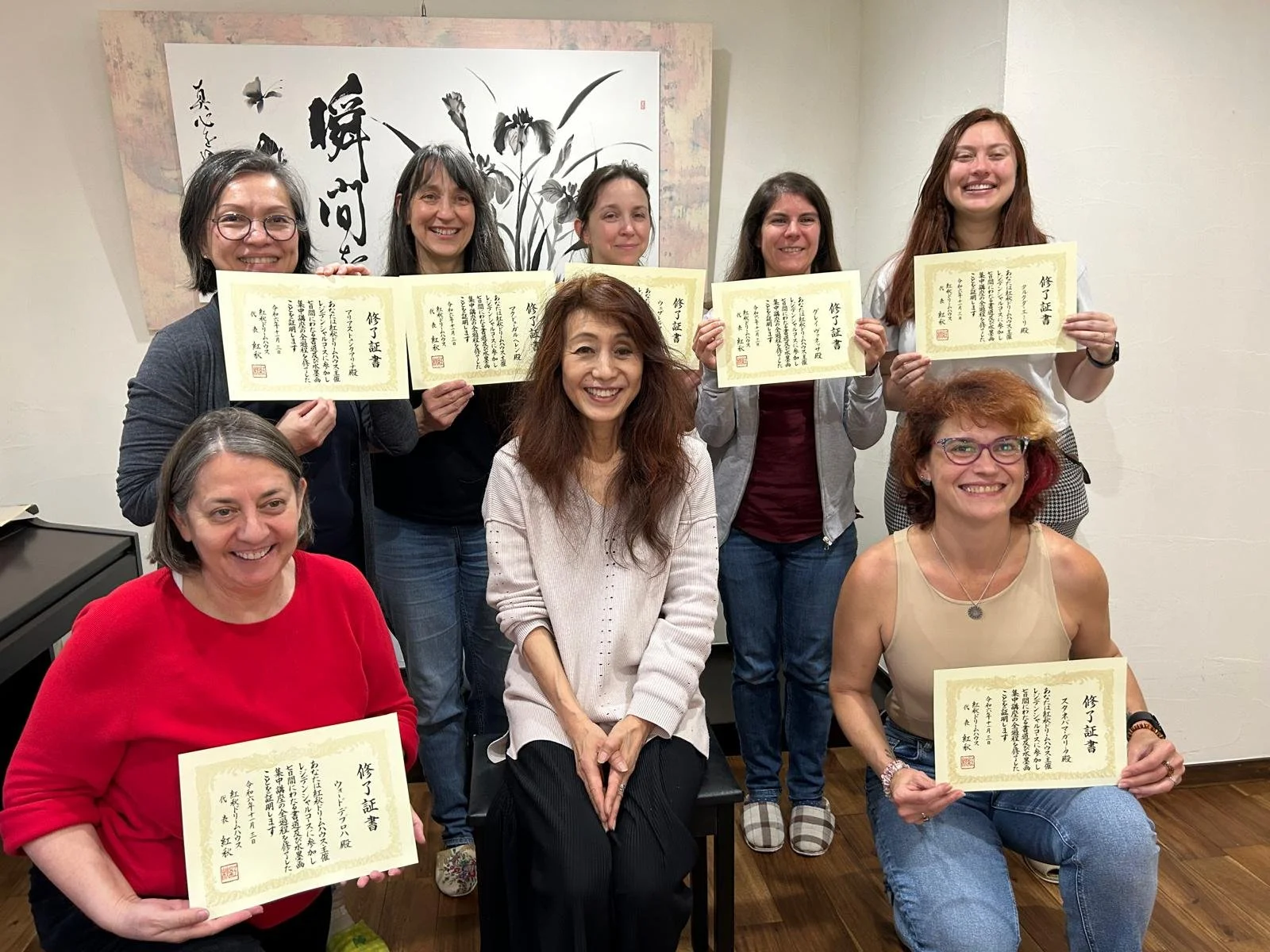
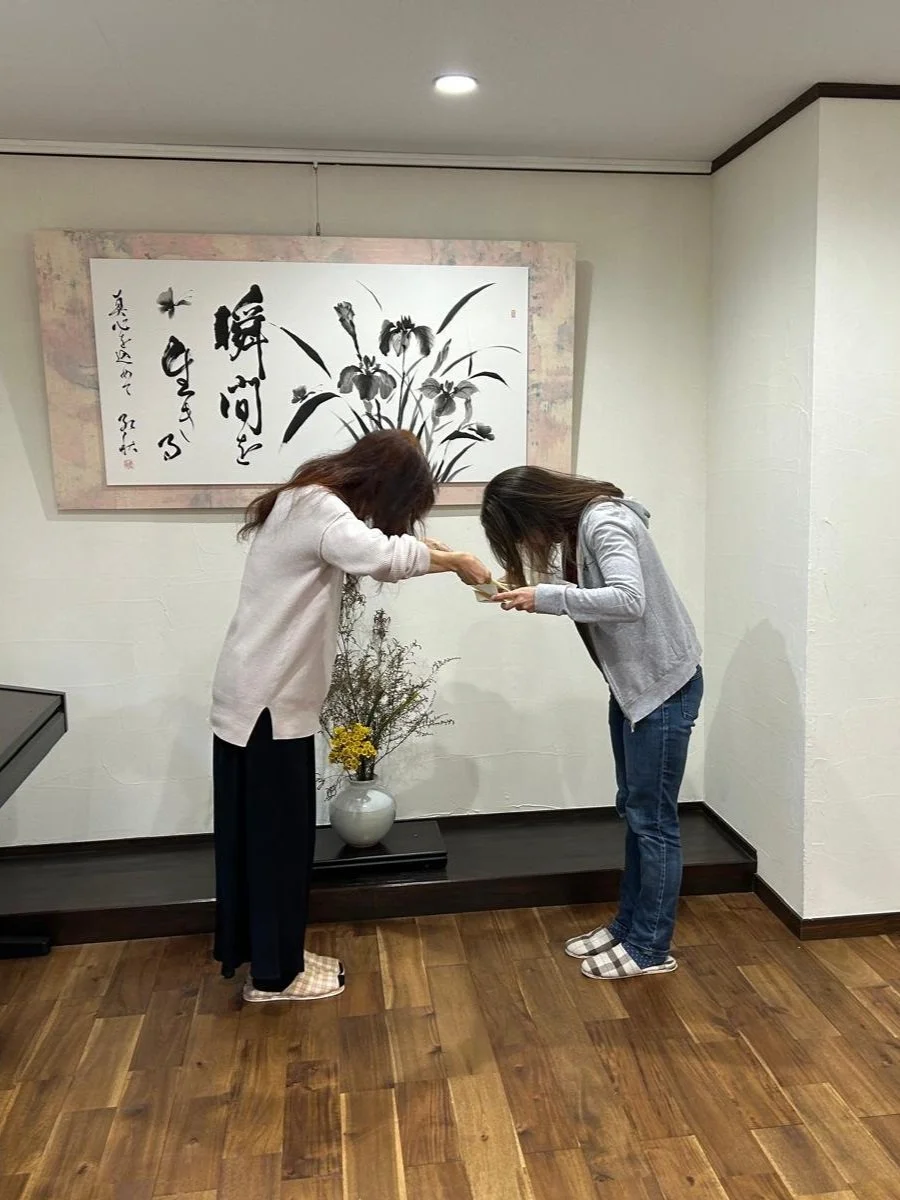
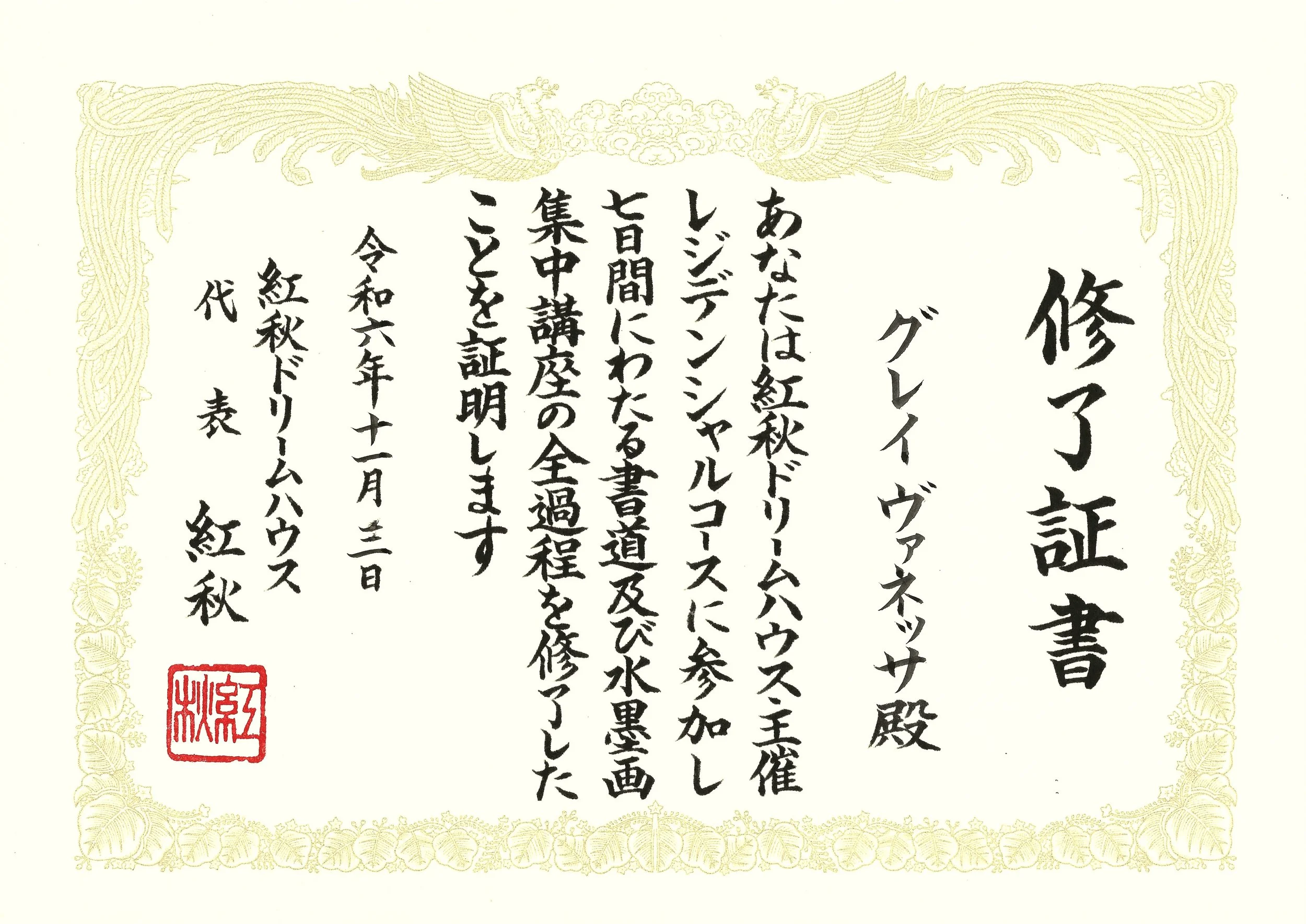
The certificate I received upon completing the course. It is beautifully calligraphed and sealed by Akemi herself. I feel the decorative frame was rather appropriate!
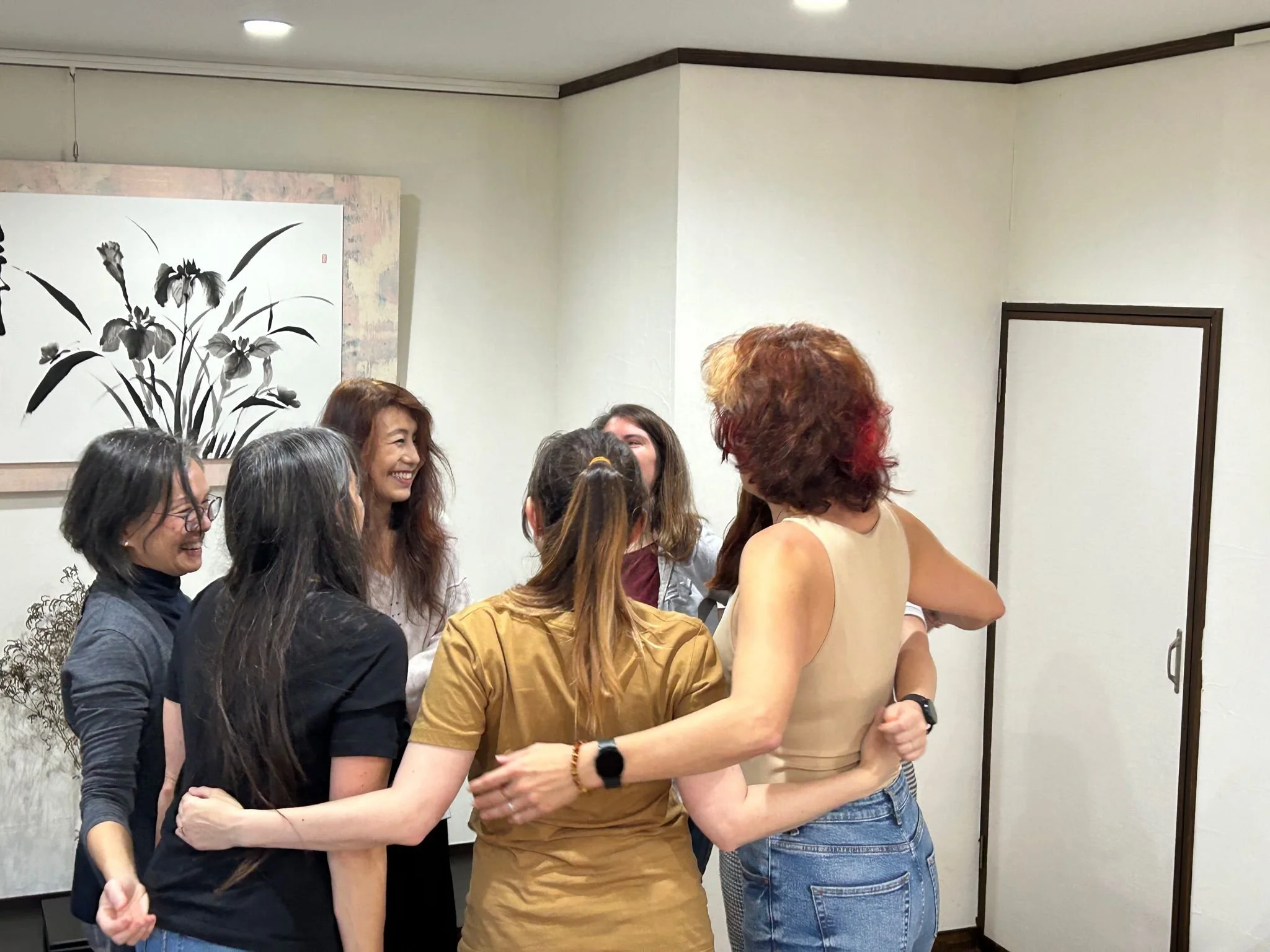
It really was a significant moment. Certificates were formally presented and received with bows and speeches from Akemi in Japanese, and there was just enough time to present thank you gifts (thank you Debroha for your efforts in organising)!
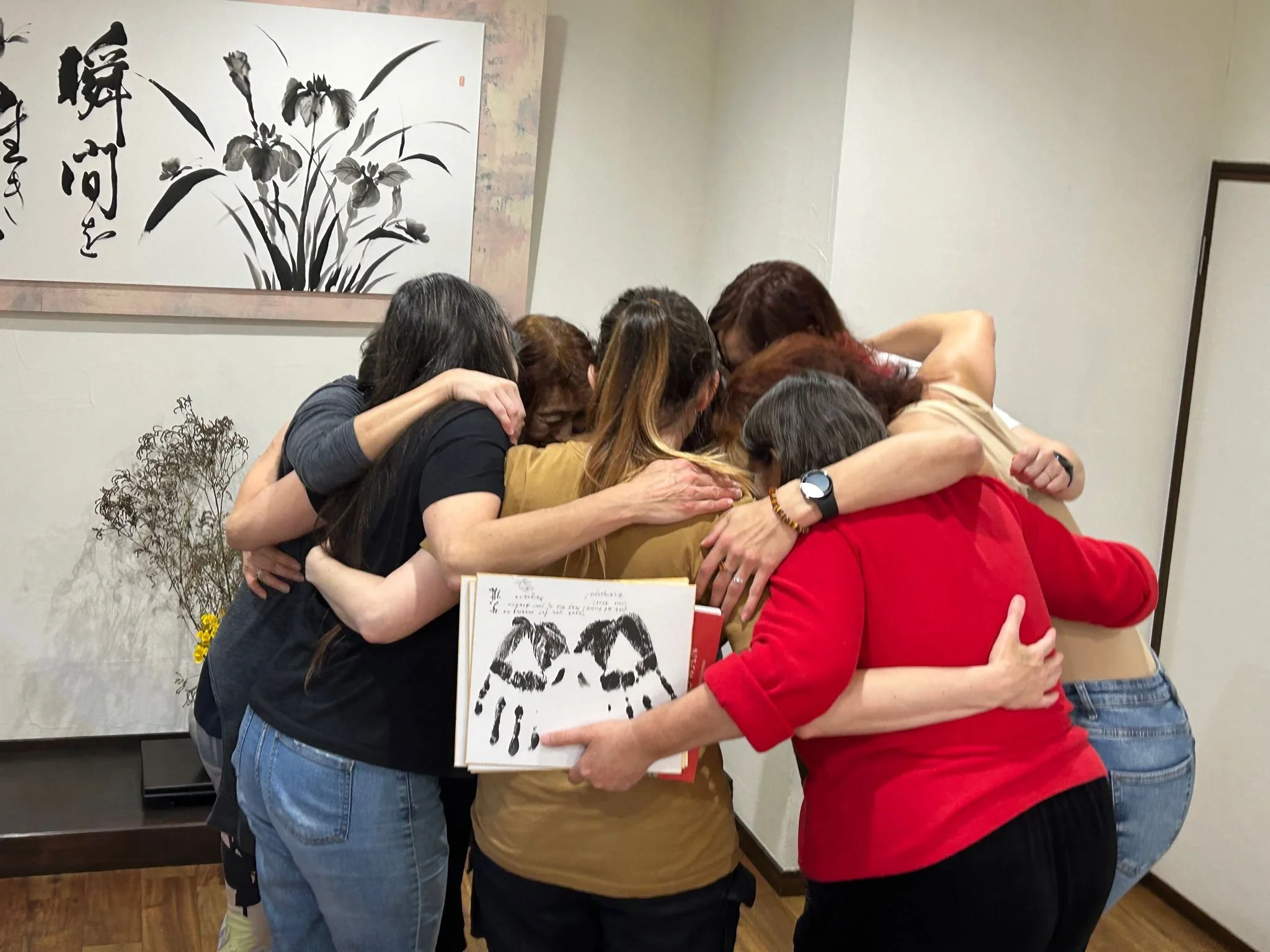
We had all formed a supportive bond by this point, and that has continue since.
There is so much I haven’t covered in these four chapters, such as the the pottery class (very satisfying), the taiko drumming (great fun) and onsen (awkwardness, followed by relaxation and a sense I did something very much out of my comfort zone).
Even though I haven’t detailed every experience, I hope these four chapters have offered a detailed insight into what the course was like for me. My blog serves the purpose of being part diary, part review. Ultimately, I hope you have found it a fascinating read, learning about shodo, sumi-e and my experiences of Japanese culture.
A special thank you to Akemi for your guidance and genuine passion for teaching.
Thank you Leanna for all your diligent work behind the scenes and in the kitchen!
Thank you Saty, Jun, Machako and Chiemi for all your delicious and healthy meals! We all miss your food!
Thank you Isami, Hisao and Fidel for ensuring we got from A to B safely and for being so patient with us!
Thank you Kenji for your openness and for sharing your wisdom.
Thank you Steve for our fantastic pottery class! My ceramics made it back home in one piece.
Thank you Debroha, Margarita, Helen, Ali, Alina and Emily for simply being amazing house mates!
And thank you Japan for being a truly impressive and welcoming country.
Thank you for taking the time to read all four chapters! If you enjoy my work and would like to support me, please consider a little donation.
Please visit https://ko-fi.com/phoenixgray to gift as little as £1. You can even leave a message too. All donations go towards the cost of art materials and supporting me as an artist.
Alternatively, you can promote me for free by simply sharing my blog or website link on your socials or website. Any in person or online recommendation helps me to reach new audiences and promote my work.
Thank you so much!